European Fat Dormouse
Glis glisEuropean Fat Dormouse (Glis glis): ecology sheet across its documented range — natural history and habitats, without hunting framing.
Seen in: Austria · Belgium · Bulgaria · Croatia · Czechia
Overview
European Fat Dormouse (Glis glis) is an ecology sheet across its documented range: natural history and habitats, without any hunting framing.
Classification: order Rodentia, family Gliridae, genus Glis. Common names: European Fat Dormouse in English, Loir gris in French, Lirón gris in Spanish.
Identification
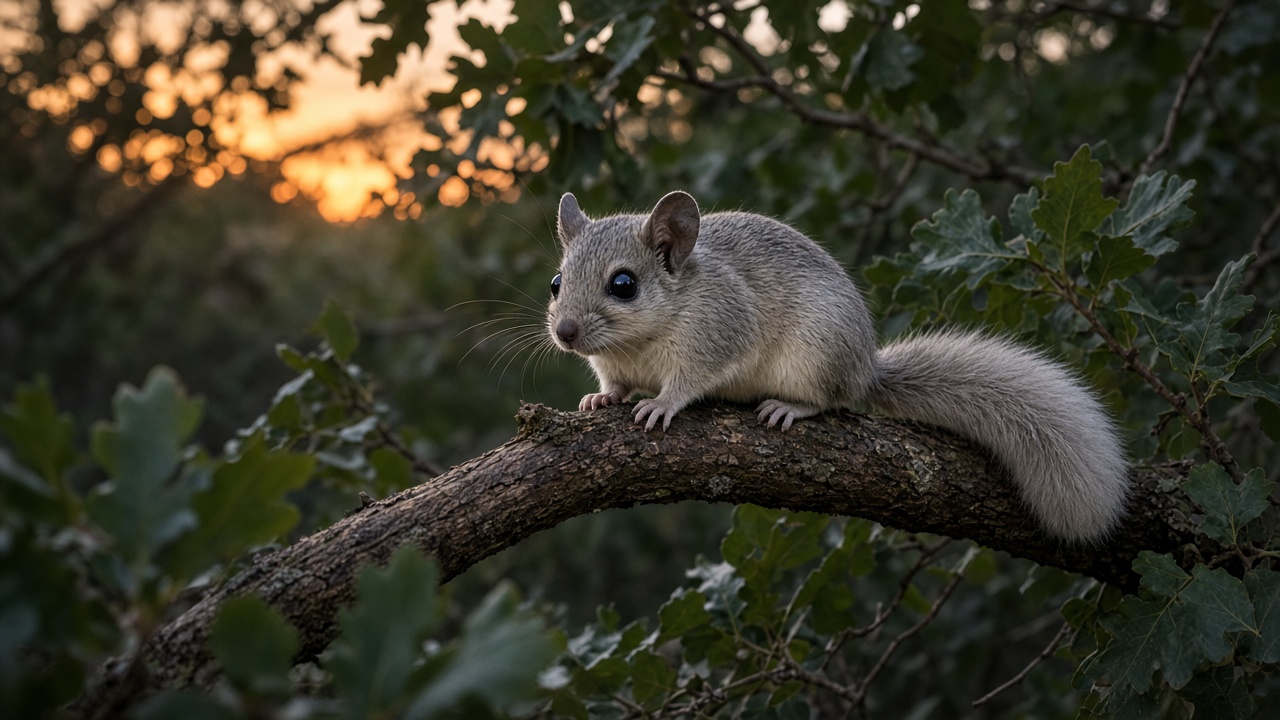
The largest of the dormice, the fat dormouse measures 160 to 190 mm head and body, with a bushy tail of up to 168 mm, and weighs 120 to 150 g; it gains substantial weight before hibernating. Short limbs, a compact body and a bushy tail give it a squirrel-like look. The fur is grey with a white belly, and the ears are small for its size. It has four digits on the forefeet and five on the hind feet, with short, curved claws. Males and females look alike.
Arboreal and nocturnal, it spends the day in nests or tree holes. It uses all three forms of dormancy – daily torpor, aestivation and true hibernation, from autumn to spring, living solely on fat reserves in soil cavities. Its main foods are beech mast, acorns and hazelnuts, with fleshy fruit in summer; flowers, leaves, fungi, invertebrates and hole-nesting birds are taken less often. It breeds only in good mast years: mating from June to August, then a single litter of about five young a month later. Owls are its main predators.
Habitats and range
MDD lists it across most of Europe, from northern Spain and France to the Volga, and from Italy, Corsica and Sardinia to the Balkans and Greece, as well as northern Turkey and the Caucasus; it has been introduced to England. It occurs from sea level to 2,000 m. It prefers deciduous and mixed woodland rich in mast-producing trees, especially beech and oak, with a dense understorey and a well-connected canopy, and avoids conifers. It also uses caves, attics, barns and nest boxes.
The countries where the species’ presence is established are shown in the tags on this sheet.
Field signs
It is often noticed in houses and gardens, where it takes over attics and barns. At night it gives twitters, chirps, shrieks, churrs, whistles and tooth-chattering; juveniles produce a buzzing sound. It marks its territory with glandular secretions and sometimes strips bark from trees, which can let infections into beech. When alarmed it bites, hisses, spits or leaps, and it can shed its tail to a predator and regrow it.
Conservation
For conservation status of Glis glis, consult the current IUCN assessment, then cross with French monitoring programmes when they exist (OFB portal and related publications). Never turn a global IUCN category into a departmental hunting rule. GBIF occurrences help situate documented distribution but remain effort-biased.
The IUCN lists it as Least Concern: it is widespread, common and tolerant of human disturbance. Formerly called Myoxus glis, it was described by ADW as the only living species of Glis; MDD notes that the species previously included G. persicus, separated in a 2021 revision of the genus. It is sometimes regarded as a nuisance in homes.
Limits
This sheet on the European Fat Dormouse covers biology and ecology only; it publishes no hunting season, quota or authorisation.
Local densities and management plans are not covered here: they are a matter for the managers of each area. Field sources related to hunting are limited, so the sheet sticks to taxonomy and ecology.
Sources
Sources consulted for this sheet:
- IUCN Red List — species search (consulted 2026-11-01)
- ASM Mammal Diversity Database — Glis glis (consulted 2026-11-01)
- GBIF — species search (consulted 2026-11-01)
- Animal Diversity Web — Glis glis (fat dormouse) (consulted 2026-11-04)
Conclusion
In short: use the scientific name Glis glis to cross-check sources, confirm taxonomy and conservation status on the institutional portals listed above, and relate every field sign to the habitat where it was actually found.
Identification
Glis glis
European Fat Dormouse · preferred
Loir gris · preferred
Lirón gris · preferred
Edible Dormouse
European Edible Dormouse
Classification
Class : Mammalia
Order : Rodentia
Family : Gliridae
Genus : Glis
Conservation
IUCN : LC
CITES : —
iucn · LC (global)
Habitat
Frequently asked questions
How do I recognise European Fat Dormouse?
Use Glis glis as the scientific anchor. The largest of the dormice, the fat dormouse measures 160 to 190 mm head and body, with a bushy tail of up to 168 mm, and weighs 120 to 150 g; it gains substantial weight before hibernating. Short limbs, a compact body and a bushy tail give it a squirrel-like look. The fur is gre...
Where does European Fat Dormouse typically live?
MDD lists it across most of Europe, from northern Spain and France to the Volga, and from Italy, Corsica and Sardinia to the Balkans and Greece, as well as northern Turkey and the Caucasus; it has been introduced to England. It occurs from sea level to 2,000 m. It prefers deciduous and mixed woodland rich in mast-producing trees, especially beech and oak, wi...
What field signs help confirm European Fat Dormouse?
It is often noticed in houses and gardens, where it takes over attics and barns. At night it gives twitters, chirps, shrieks, churrs, whistles and tooth-chattering; juveniles produce a buzzing sound. It marks its territory with glandular secretions and sometimes strips bark from trees, which can let infections into beech. When alarmed it bites, hisses, spits...