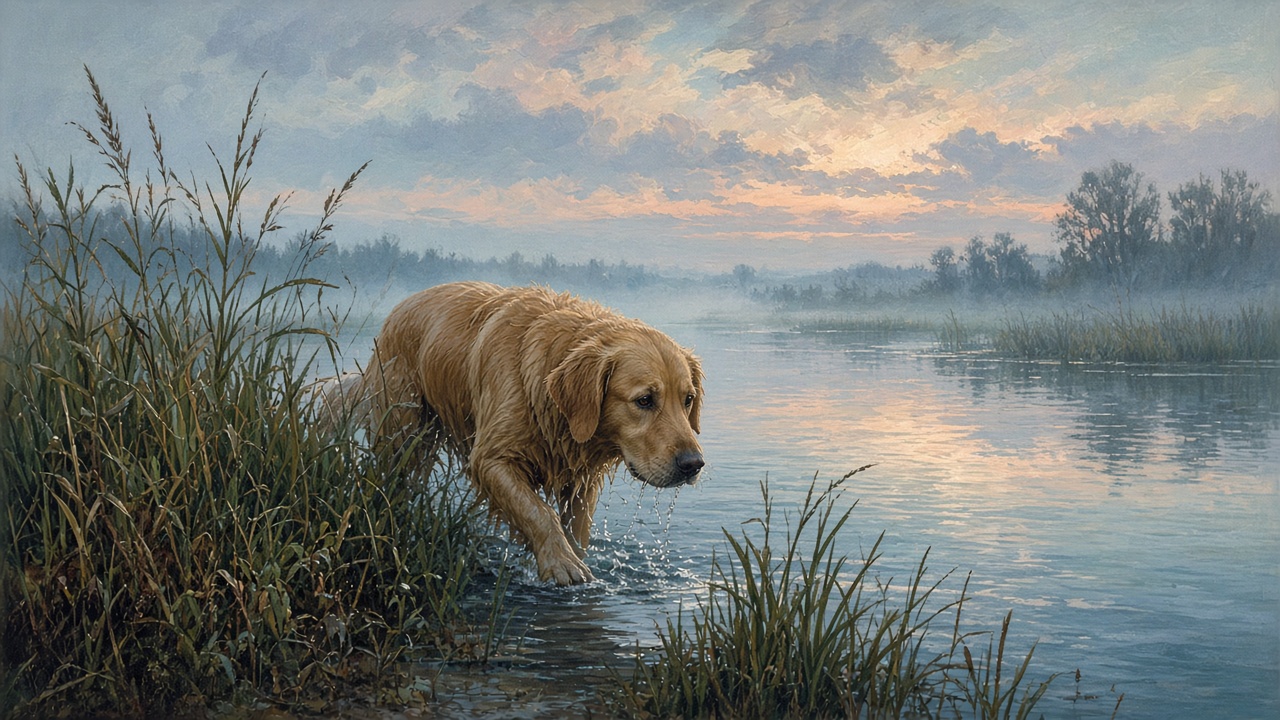
- Family
- Hunting with dogs
- Difficulty
- Moderate to high: steadiness and blind retrieves take patient, regular training
- Organisation
- A gun with their own dog, or a picker-up working several dogs behind the line
- Key gear
- A trained dog, a whistle, training dummies, a neoprene vest and a towel
- Season
- Follows the season for the quarry being shot: check with the local authority
- Who it suits
- Handlers who enjoy training and are happy to spend the day watching where birds fall
What is the idea behind hunting with retrievers?
A retriever comes into its own after the shot. Its job is to find the fallen bird, dead or wounded, and bring it back to hand without damaging it. It stops shot game being lost in brambles, hedges or water, which makes it as useful when wildfowling as on a driven or walked-up day.
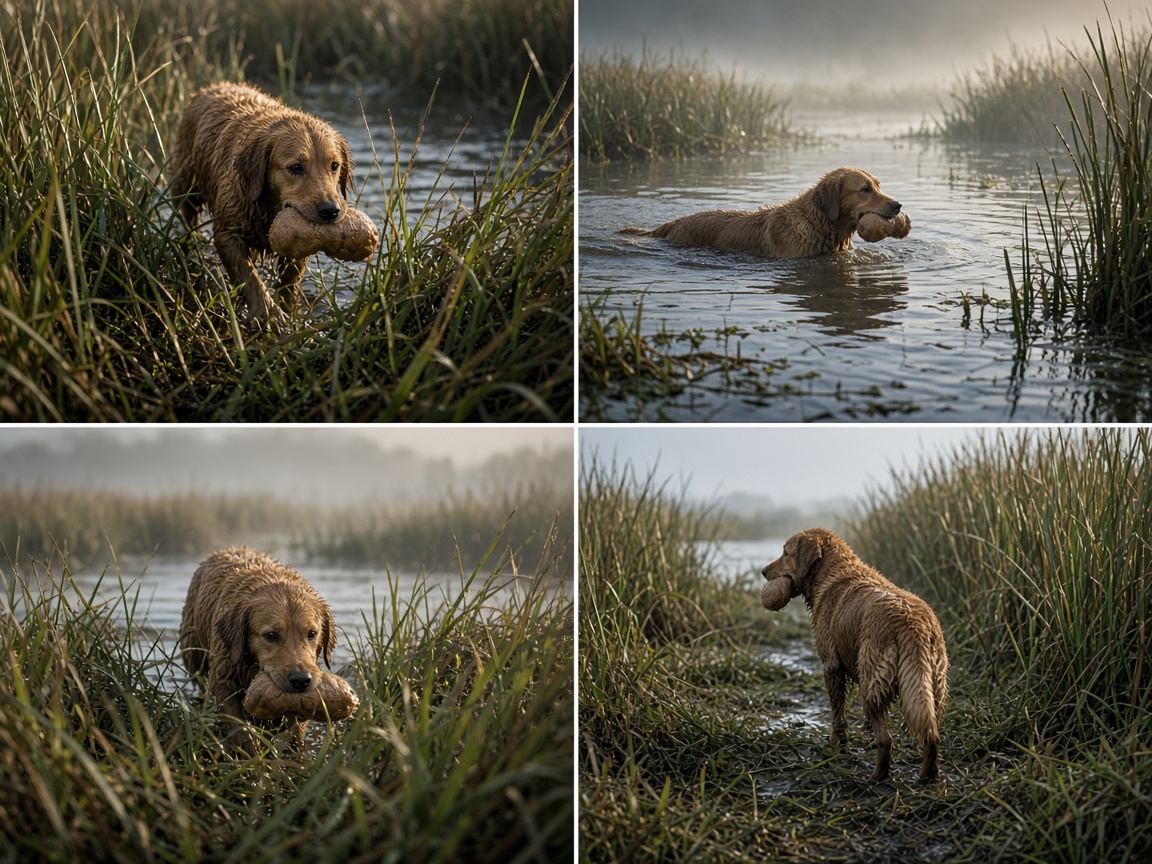
Three qualities are looked for. Steadiness: the dog stays at heel or sitting while birds are shot and goes only when sent. Marking: it watches the bird fall and remembers the spot so it can go straight there. A soft mouth: it carries the bird without crushing or biting it, so it is delivered intact. When the dog has not seen the bird fall, the handler directs it by whistle and hand signals: this is a blind retrieve.
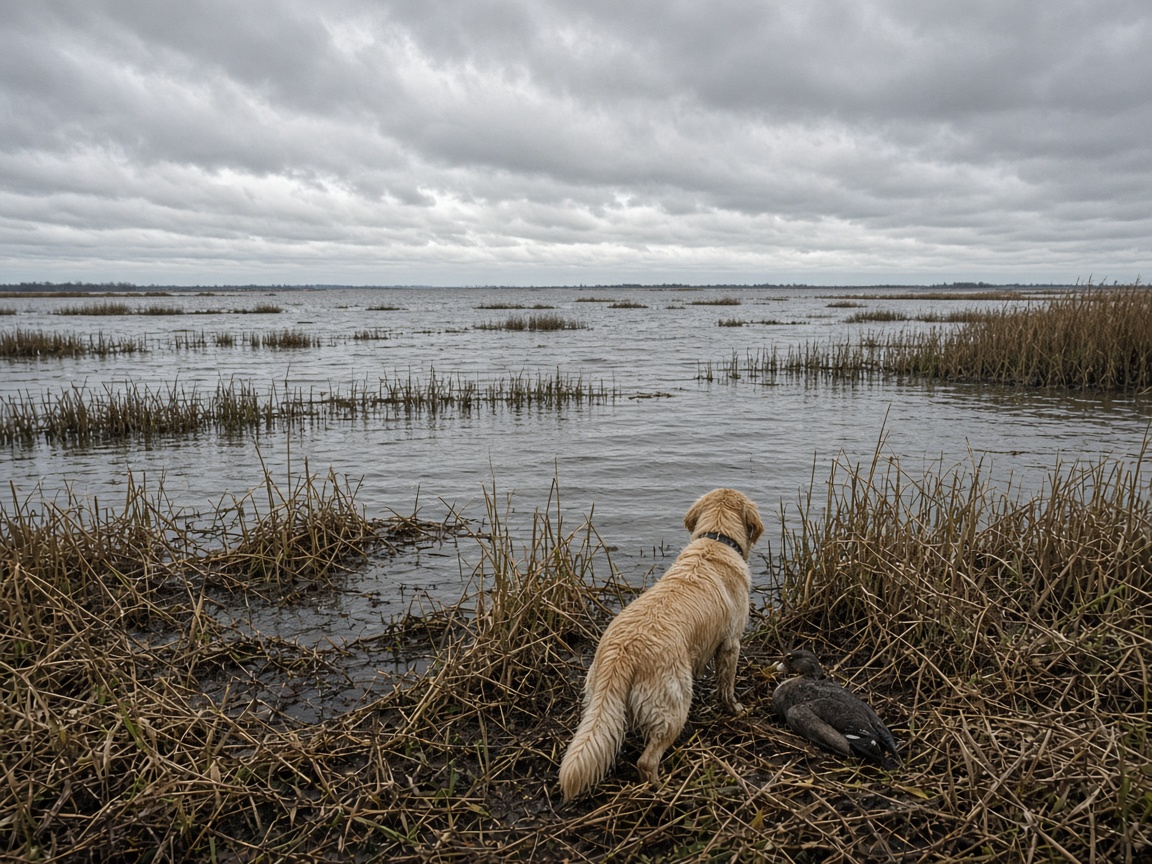
On larger British shoots, pickers-up work their dogs behind the line of guns to collect birds that fall far back or are wounded. When wildfowling, the dog often retrieves from water, sometimes in the cold, so its fitness and protection matter as much as its training.
How does hunting with retrievers work in the field?
What equipment do you need for hunting with retrievers?
- A whistle and, for training, canvas dummies to work on marking and blind retrieves
- A neoprene vest for a dog working in cold water
- A towel and a blanket or dog crate to dry and shelter the dog between retrieves
- A canine first-aid kit
Safety rules for hunting with retrievers
- Send the dog only once shooting has stopped, or when everyone knows it is going
- Watch for signs of chilling after cold-water work, such as shivering, stiffness or tiredness, and do not send the dog in again if they appear
- Check beforehand for currents, steep banks, ice and submerged fences that could put the dog at risk
- Shoot only when you know where the dog is and it is clear of the line of fire
Common mistakes in hunting with retrievers
- Letting the dog run in at the shot, which flushes game from the next area and annoys neighbours
- Pulling the bird from the dog’s mouth, which encourages it to grip harder
- Giving the dog only easy marked retrieves and never practising blind ones
- Working a dog that is tired, thirsty or not fit for the season
Which species are hunted by hunting with retrievers?
Where is hunting with retrievers practised?
England
In England, picking-up is a role in its own right on driven shoots: pickers-up and their dogs collect game behind the line, wounded birds first, as the BASC code sets out. For ground game, the Hunting Act 2004 exempts retrieving a shot hare on land where one has permission (Schedule 1, paragraph 5). The Royal Kennel Club oversees field trials and working tests for retrievers, spaniels and HPRs.
France
In France, retrievers such as the Labrador and the golden retriever mainly accompany wildfowling and driven days for pheasant and partridge. The Société centrale canine recognises the breeds and oversees working trials; hunting rules, including those for wetlands, fall under the Environment Code and prefectoral orders.
Germany
Retrieving, Bringen, and searching for lost game, Verlorensuche, are part of the trials of the JGHV, the German working gundog federation. Dogs are judged in water among thick vegetation as well as on game birds in the field.
North Rhine-Westphalia (Germany)
In North Rhine-Westphalia, dogs certified as fit for hunting are compulsory for waterfowl and woodcock hunting, for walked-up and driven hunts, and for every search for wounded game. Training on live waterfowl is allowed only with mallards.
Scotland
In Scotland, picking-up is part of pheasant, partridge and grouse days. For mammals, the 2023 Act allows no more than two dogs under control to retrieve an animal killed while shooting or hawking (section 6), or to search for a dead mammal (section 8), with the landowner’s permission. The Royal Kennel Club oversees field trials and working tests.
Western Cape (South Africa)
In the Western Cape, CapeNature allows dogs for hunting birds during their open season and for following up and searching for a wounded animal, although dogs are otherwise excluded from hunting means. Protected species are hunted under licence, following the province's annual notice.
Spain — Castilla y León
In Spain, the retriever is called perro cobrador. It collects partridges after an ojeo, retrieves duck from water and works on walked-up days. The RSCE recognises the breeds and working trials, and hunting rules are set by the autonomous communities.
Sweden
When hunting woodpigeon, geese and ducks, hunters must have with them a dog able to retrieve or mark game. The duty lapses on snow, from a boat in open water, and on the coast with decoys (vettar).
Rules vary by country and region: check with the local authority. See the sources
Hunting with retrievers compared with neighbouring techniques
A retriever works after the shot, whereas a pointing dog finds and shows the bird before it. Unlike blood tracking, in which a dog on a long lead follows the line of wounded big game, a retriever works free to collect small game that has fallen within sight or whistle range. On a driven shoot as when wildfowling, it is the dog that keeps losses down.
Key terms in hunting with retrievers
- retriever
- A dog trained to find and bring back shot game to hand, on land or from water.
- retrieve
- The dog bringing shot game back to the handler’s hand.
- marking
- The dog’s ability to watch a bird fall and remember the spot so it can go straight to it.
- blind retrieve
- Retrieving a bird the dog did not see fall, directed by whistle and hand signals.
- soft mouth
- Carrying game without crushing or biting it, so it is delivered undamaged; the opposite fault is a hard mouth.
- picker-up
- A handler who works retrievers behind the line to collect shot and wounded birds.
- driven shoot
- A shooting day in which birds are driven over a line of numbered pegs.
- wildfowl
- Ducks, geese and other quarry birds of wetlands and coasts.
- ojeo
- The Spanish driven shoot for red-legged partridge, with beaters pushing birds towards a line of stands hidden behind screens (pantallas).
Frequently asked questions about hunting with retrievers
What is hunting with retrievers?
It means shooting with a dog trained to find fallen game and bring it back to hand, on land or from water, so that as few birds as possible are lost.
What does marking mean for a retriever?
Marking is the dog’s ability to watch a bird fall and remember where it landed. A dog that marks well goes straight to the fall, which saves time and disturbs the ground less.
What is a blind retrieve?
It is the retrieve of a bird the dog did not see fall. The handler sends it in the right direction and guides it with whistle and hand signals until it picks up the scent.
Why does a retriever need a soft mouth?
Because it must carry the bird without crushing it, so that the game reaches the hand intact. A dog that damages game is said to have a hard mouth, a fault that is penalised in trials.
Can a retriever work in cold water?
Many retrievers are bred for it, but cold water remains a risk. Keep outings short, use a neoprene vest, dry the dog afterwards and stop if it starts shivering or tiring.
What is picking-up?
On British shooting days, picking-up is the work of handlers who, with their dogs, collect fallen and wounded birds behind the line during and after each drive.
Hunting with retrievers in pictures
Sources and references on hunting with retrievers
- Société centrale canine — Races, groupes et épreuves de travail des chiens de chasse
- Légifrance — Code de l’environnement, livre IV, titre II : chasse
- Real Sociedad Canina de España (RSCE) — Razas y pruebas de trabajo de perros de caza (consulted on )
- Real Federación Española de Caza (RFEC) — Modalidades, licencias y federaciones autonómicas (consulted on )
- Boletín Oficial del Estado (BOE) — Legislación estatal y autonómica de caza (consulted on )
- The Kennel Club — Gundog breeds and field trials (consulted on )
- Code of Good Shooting Practice — The Code of Good Shooting Practice (consulted on )
- BASC — Wildfowling (consulted on )
- Jagdgebrauchshundverband (JGHV) — Ordnung für die Verbandsgebrauchsprüfung (VGPO) et Verbandsprüfung nach dem Schuss (VPSO), édition 2018 (PDF) (consulted on )
- Boletín Oficial del Estado (BOE) — Ley 4/2021, de 1 de julio, de Caza y de Gestión Sostenible de los Recursos Cinegéticos de Castilla y León (texto consolidado) : arts. 32-40, 50-51 y anexo III (modalidades) (consulted on )
- Légifrance — Code de l'environnement, article L424-6 : lieux de chasse du gibier d'eau (zone maritime, marais non asséchés, cours et plans d'eau) (consulted on )
- Sveriges riksdag — Jaktförordning (1987:905), 14 §, 14 a §, 17 §, 19 § et 20 § (consulted on )
- Land Nordrhein-Westfalen (recht.nrw.de) — Landesjagdgesetz Nordrhein-Westfalen (LJG-NRW), version consolidée publiée sur recht.nrw.de (consulted on )
- CapeNature (Western Cape Nature Conservation Board) — Guide for hunters in the Western Cape : prohibited hunting means and exceptions (dogs for birds in season and for wounded animals) (consulted on )
- BASC — Picking up (code of practice) (consulted on )
- legislation.gov.uk — Hunting with Dogs (Scotland) Act 2023, section 6 : exception, fauconnerie, tir du gibier et deer stalking (consulted on )
Practice information — not a legal authorisation.