- Family
- Wetland shooting
- Difficulty
- Moderate: little walking, but a great deal of work on the pond and decoys, and long, cold waits
- Organisation
- Alone or two or three in the same hide, often partners in one installation
- Key gear
- A well-kept hide, decoys, a call, cartridges suited to wetlands, a retriever
- Season
- Varies by species, department and country; night shooting exists only where the rules provide for it
- Who it suits
- Patient shooters willing to put in year-round work maintaining an installation
What is the idea behind waterfowl hide hunting?
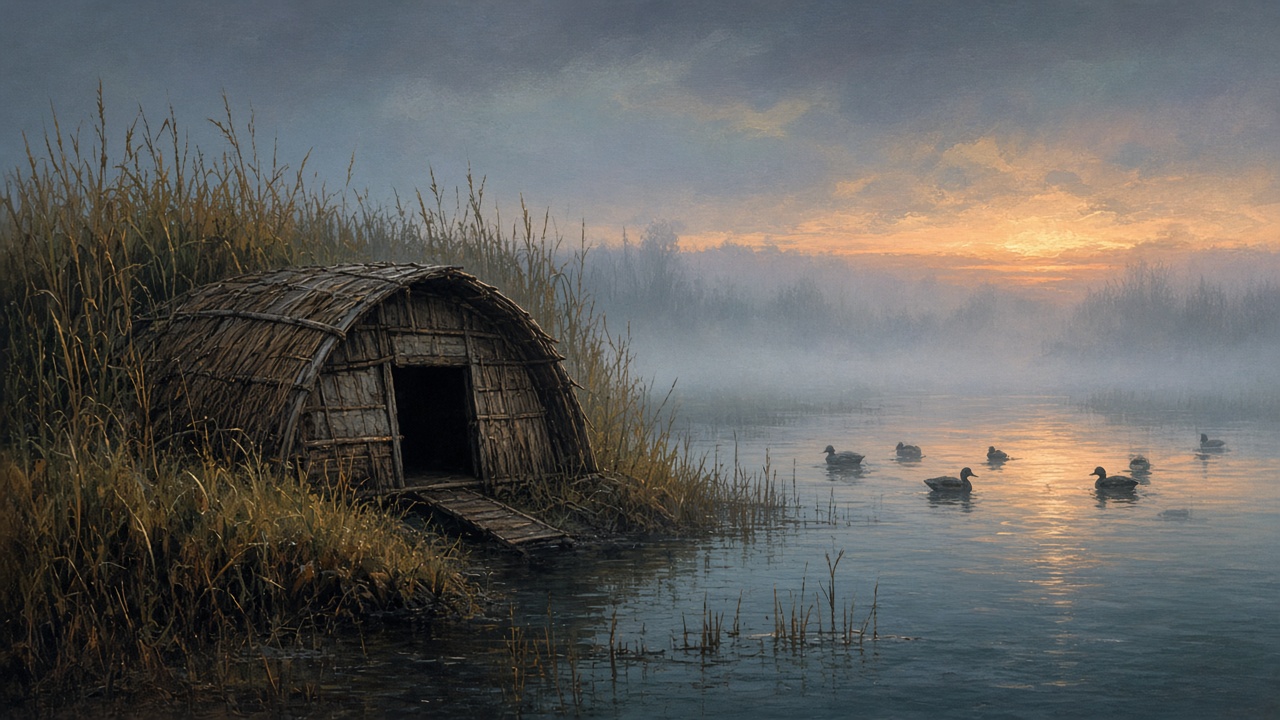
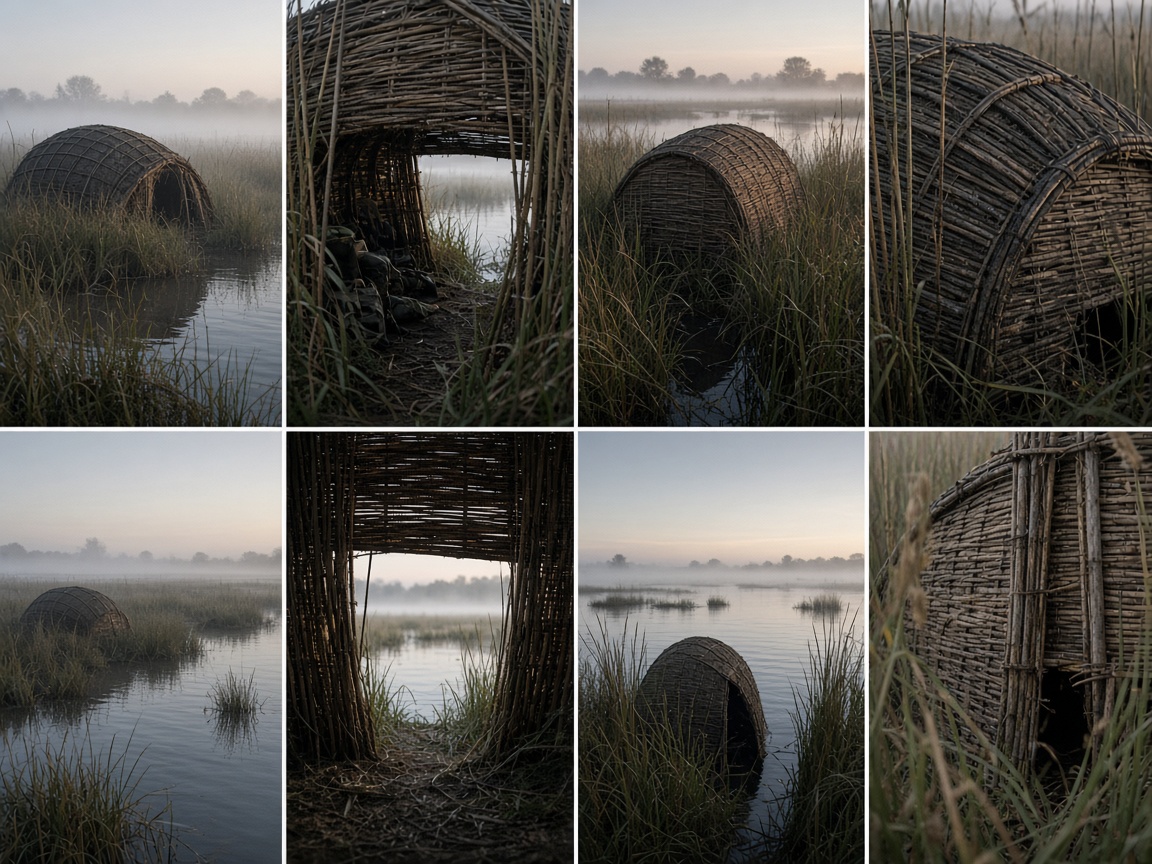
Everything depends on the installation. The hide is a permanent structure, often half-sunk, floating or built on stilts, with narrow openings that look out over a pond kept specially for it, the hide pond. Birds passing over the marsh see others sitting on the water, hear them calling and drop in to land within range.
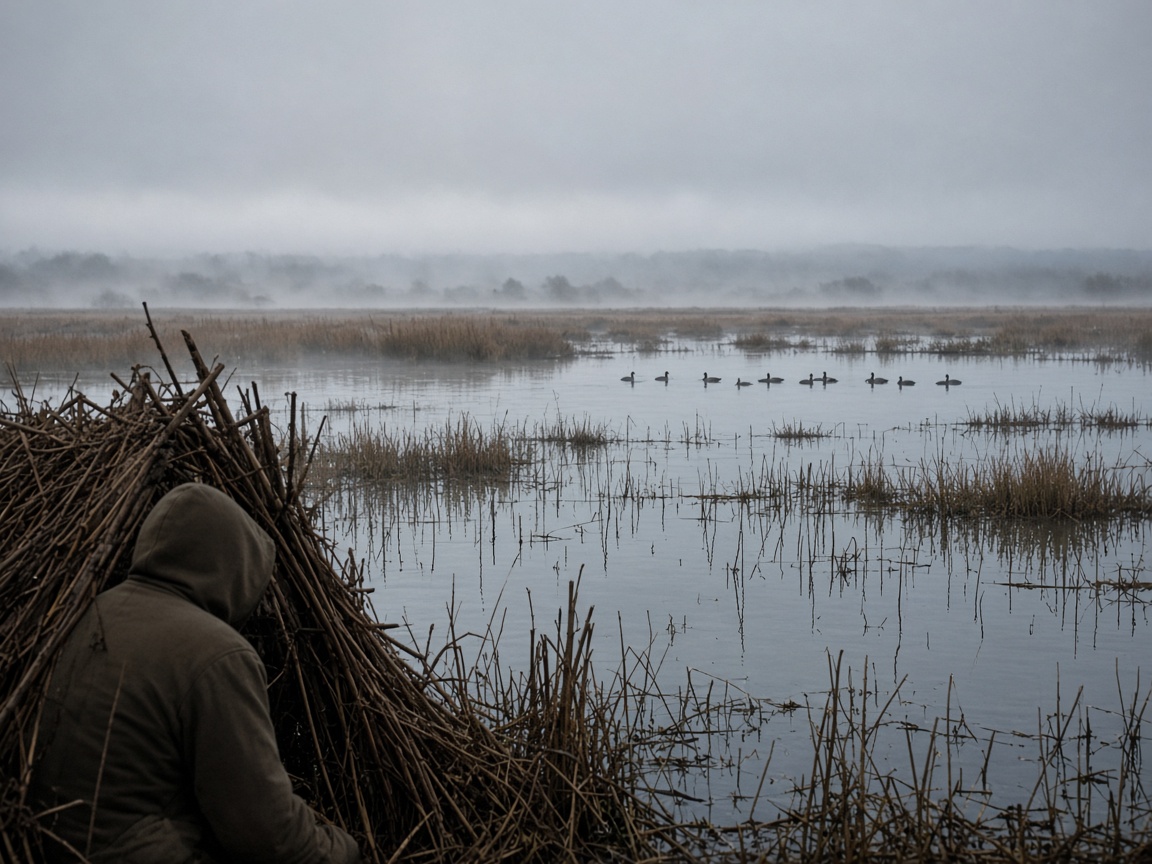
The hide keeper, known in northern France as the huttier, does most of the work out of season: managing the water level, cutting back reeds, keeping the banks clear and looking after the decoys. On the day, the decoys are set out according to the wind, and then comes a long wait, sometimes all night, keeping out of sight. Results depend as much on the pond as on patience.
Night shooting is what sets the French hutte apart. It is possible only in certain departments and from registered hides, under conditions set by the French Environment Code, which include keeping track of the bag. Elsewhere in France, a permanent hide is used only by day and at morning and evening flight, within the hours set by the rules; in other countries, night shooting follows rules of its own.
How does waterfowl hide hunting work in the field?
What equipment do you need for waterfowl hide hunting?
- Live decoys where the rules allow, or plastic or wooden decoys, with their anchor lines
- A duck or goose call to answer passing birds
- A small boat or waders to set out decoys and collect birds
- Non-lead cartridges suited to your gun, which the European Union requires in wetlands; the UK applies its own rules
Safety rules for waterfowl hide hunting
- Never leave the hide with a loaded gun to pick up a bird
- Ventilate the hide if any heater is running: carbon monoxide is a real danger in an enclosed shelter
- Learn in daylight the safe arcs from each opening and where nearby houses and paths lie
- Know the tides, channels and soft mud before you go out
Common mistakes in waterfowl hide hunting
- Leaving live decoys without water, shelter or care between outings
- Setting decoys without regard to the wind, when birds land facing into it
- Letting reeds and silt take over the pond until birds no longer want to land
- Shooting in poor light without being sure of the species
Which species are hunted by waterfowl hide hunting?
Where is waterfowl hide hunting practised?
England
In England there is no direct equivalent of the French night-time hutte. The nearest practice is evening or dawn flighting from a hide beside a flight pond, a pond or marsh where ducks come in to feed; BASC sets out standards in a code that advises shooting a pond no more than once a fortnight. Lead shot may not be used for ducks or geese anywhere (SI 1999/2170, regulation 3).
France
In France the hide has regional names: hutte in the north, in Picardy and around the Bay of the Somme, tonne in the Gironde and the south-west, gabion in Normandy. Night shooting from these hides is possible only in certain departments; the departmental hunting federation and the OFB explain the rules that apply.
Scotland
Scotland has no direct equivalent of the night-time hutte either: ducks are shot at flight from a hide beside a flight pond, following the BASC code. All lead shot is banned over wetlands as defined by the Ramsar Convention (SSI 2004/289), which covers such ponds, and wildfowl may not be shot on Sundays or Christmas Day.
Spain — Castilla y León
In Spain, fixed hides by the water exist in several wetlands under local names, but there is no equivalent of French night shooting from a hutte. Each autonomous community sets its own rules, including shooting hours, and the regional hunting federation can explain local arrangements.
Rules vary by country and region: check with the local authority. See the sources
Waterfowl hide hunting compared with neighbouring techniques
The hide is the static form of waterfowl hunting: you stay put and bring the birds to a managed pond. Flight shooting, by contrast, waits for birds on their route through the air, with no pond and no installation. Decoys are essential at the hide, but their use reaches far beyond wetlands, to pigeons and crows.
Key terms in waterfowl hide hunting
- hide
- A concealed shelter by water; in France, a fixed hut beside a managed pond, used at night in some departments.
- hide pond
- A managed pond in front of a permanent hide, where decoys are set out and birds come in to land; close to what British shooters call a flight pond.
- decoy
- An artificial bird, or a live one where the law allows it, set out to draw birds in.
- call
- A device that imitates an animal’s cry to bring it closer.
- wildfowl
- Ducks, geese and other quarry birds of wetlands and coasts.
- retriever
- A dog trained to find and bring back shot game to hand, on land or from water.
- non-lead shot
- Lead alternatives such as steel, bismuth or tungsten; check your gun is proofed for them.
Frequently asked questions about waterfowl hide hunting
What is waterfowl hide hunting?
It is shooting ducks and geese from a fixed position, in a hide built beside a managed pond where decoys are set out to bring birds down onto the water.
What is the difference between a hutte, a tonne and a gabion?
They are the same idea under regional names: hutte in northern France and Picardy, tonne in the south-west, gabion in Normandy. Construction varies: sunken, floating or on stilts. The principle is always a fixed hide facing a pond.
Is night shooting from a hide allowed everywhere?
No. In France it is possible only in certain departments and from registered hides, under conditions set by the Environment Code. In other departments the hide is used only by day and at flight times; abroad, local rules should be checked.
What decoys are used at a hide?
Artificial decoys in wood or plastic and, where the rules allow, live ducks or geese. Keeping and moving live decoys may be restricted, especially during avian influenza outbreaks.
How do you look after a hide pond?
By managing the water level, cutting back reeds that creep across the pond, and keeping the banks clear and the bottom firm enough to wade out with decoys. Most of the work is done out of season.
Are there huttes in the UK or Spain?
Not in that form. In the UK people shoot from a hide beside a flight pond; in Spain there are fixed hides in some wetlands. Night shooting follows its own rules in each country.
Waterfowl hide hunting in pictures
Sources and references on waterfowl hide hunting
- Office français de la biodiversité (OFB) — Chasse, permis de chasser et police de l’environnement (consulted on )
- Fédération nationale des chasseurs (FNC) — Chasseur de France : pratiques, sécurité et fédérations départementales (consulted on )
- Légifrance — Code de l’environnement, livre IV, titre II : chasse
- EUR-Lex — Règlement (UE) 2021/57 sur le plomb dans les munitions en zones humides (consulted on )
- British Association for Shooting and Conservation (BASC) — Shooting advice and codes of practice (consulted on )
- BASC — Wildfowling (consulted on )
- BASC — Lead ammunition (consulted on )
- Real Federación Española de Caza (RFEC) — Modalidades, licencias y federaciones autonómicas (consulted on )
- Boletín Oficial del Estado (BOE) — Legislación estatal y autonómica de caza (consulted on )
- Boletín Oficial del Estado (BOE) — Ley 4/2021, de 1 de julio, de Caza y de Gestión Sostenible de los Recursos Cinegéticos de Castilla y León (texto consolidado) : arts. 32-40, 50-51 y anexo III (modalidades) (consulted on )
- Légifrance — Code de l'environnement, article L424-5 : chasse de nuit du gibier d'eau à partir de postes fixes (huttes, tonnes, gabions) (consulted on )
- BASC — Flight ponds code of practice (consulted on )
- legislation.gov.uk — Environmental Protection (Restriction on Use of Lead Shot) (Scotland) Regulations 2004, SSI 2004/289, regulations 3 et 4 (zones humides) (consulted on )
Practice information — not a legal authorisation.