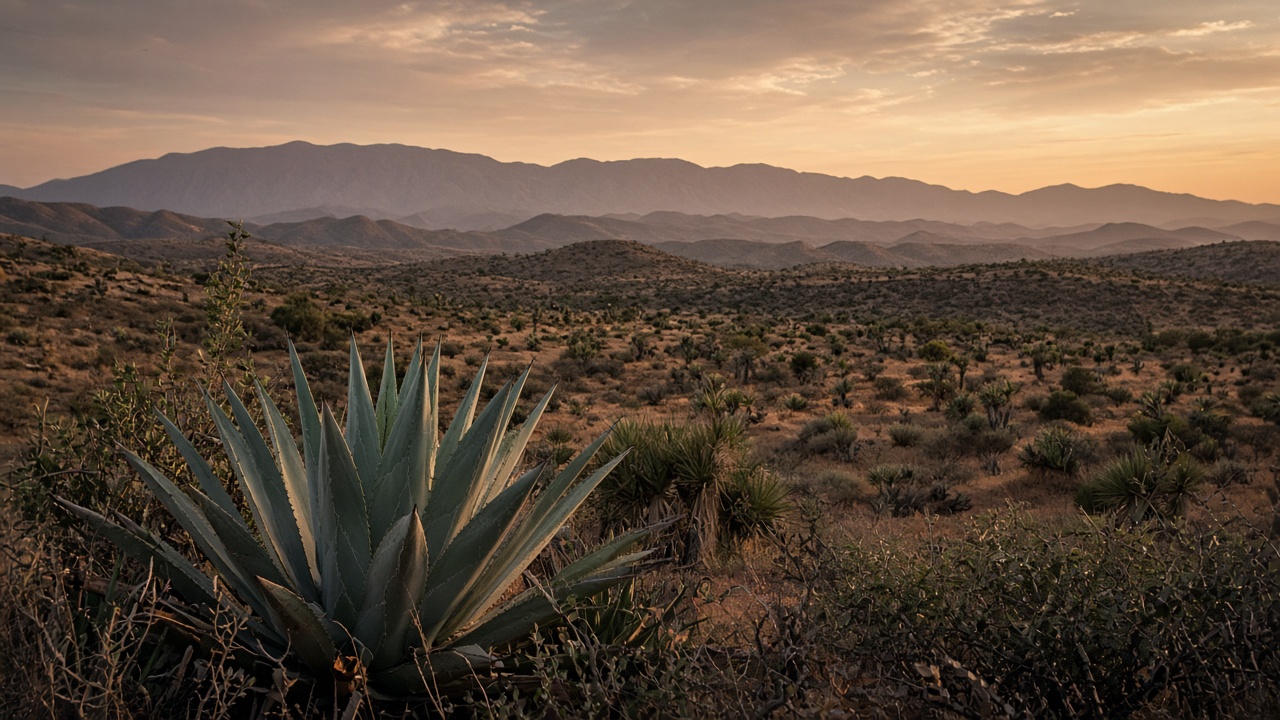
Landscapes, damage and land use
UMAs are presented as a tool for conservation through use, giving wildlife economic value. Their effectiveness depends on real population monitoring.
Wildlife health
Exporting trophies and meat falls under SENASICA health controls and, for some species, CITES.
Hunters from abroad
Foreign hunters hunt with a licensed outfitter on an UMA. Temporary firearm import requires a SEDENA permit, usually requested by the outfitter, and a consular declaration.
African swine fever: what Mexico declares, and what changed in 2025
In a self-declaration sent to the World Organisation for Animal Health (WOAH, document dated 19 July 2018), Mexico declares itself historically free of African swine fever: no case or evidence of the disease had ever been recorded in the country, feral pigs included. The text places the largest feral pig populations in the south of the Baja California peninsula, central and eastern Chihuahua, western Coahuila, northern Nuevo León and north-western Tamaulipas, and states that neither SEMARNAT nor the UMAs had reported a suspicion there. That declaration dates from 2018: it describes a past situation, not today’s status, which hunters should confirm with SENASICA before travelling.
The threat comes mainly from abroad. In December 2025, SENASICA suspended imports of all Spanish pork products after the disease was detected in two wild boars at Cerdanyola del Vallès, near Barcelona (Mexico Business News, business press). Mexico had imported 1,689 tonnes of pork products from Spain between January and October 2025, about 0.06% of its pork imports, and the measure also covered products carried by travellers. A hunter returning from an affected area should not count on bringing meat or cured products home: ask SENASICA before leaving.
Wild boar and feral pigs: an invasive alien species under Mexican law
The SEMARNAT agreement published in the Official Gazette (DOF) on 7 December 2016 lists Sus scrofa (“jabalí europeo”) and the feral domestic pig in Annex I of the list of invasive alien species for Mexico. The Ley General de Vida Silvestre (latest reform shown on that site: DOF of 16 July 2025) forbids, in article 27 Bis, releasing or introducing such species into natural habitats. In practice, the treatment of wild boar varies with the authority and the season: the federal hunting calendar for 2021-2022 excluded the feral pig and asked for any sighting to be reported, whereas the State of Chihuahua lists the European wild boar among the species of its sport-hunting season, announced in December 2025. A rule from one season or one state does not apply elsewhere: ask the UMA for a copy of its current authorisation.
Hares and rabbits: rabbit haemorrhagic disease (RHDV2)
For the 2021-2022 season, the General Directorate of Wildlife (DGVS, SEMARNAT) had suspended hare and rabbit hunting “until further notice” because of rabbit haemorrhagic disease type 2 (RHDV2) in seven states: Chihuahua, Sonora, Baja California, Baja California Sur, Coahuila, Durango and Zacatecas. Any dead wild hare or rabbit had to be reported immediately to the CPA emergency line, 800 751 2100 (DGVS document 2021-2022). These measures belong to that season: read the calendar for the current season on the DGVS website before travelling.
Tagging and traceability: what to remember
According to the same DGVS document, hunting is allowed only on a UMA or federal property holding a valid extractive-use authorisation. Each animal taken receives a numbered “cintillo” tag that is personal, non-transferable, valid for a single kill and for the current season, and proves legal origin. Shooting is allowed from 20 minutes after sunrise to 30 minutes after sunset; young animals and visibly pregnant females may not be taken; the UMA files an annual report between April and June with the number of animals per species and the tag numbers. The law provides for the marking system in the management plan (art. 40) and accepts the tag, or an invoice citing the authorisation number, as proof of origin (art. 51). In Chihuahua the tag carries the UMA registration number, the species, the municipality and the season, and the state counts about 250 active UMAs.
Key figures
UMA area: SEMARNAT indicators. The 2025 health figures come from the business press and should be cross-checked with SENASICA.