- Family
- Collective game-bird shooting
- Difficulty
- Moderate to high: very high or very fast birds on the moor, strict line discipline, customs to learn
- Organisation
- A team of guns, the gamekeeper, beaters, flankers, pickers-up and sometimes loaders
- Key gear
- A shotgun, cartridges that meet the rules of the nation, ear defenders, muted clothing in keeping with the estate
- Season
- Varies by species and by UK nation: check with BASC or the relevant national authority
- Who it suits
- Experienced game shots, or accompanied beginners, happy to work within well-established customs
What is the idea behind driven shooting?
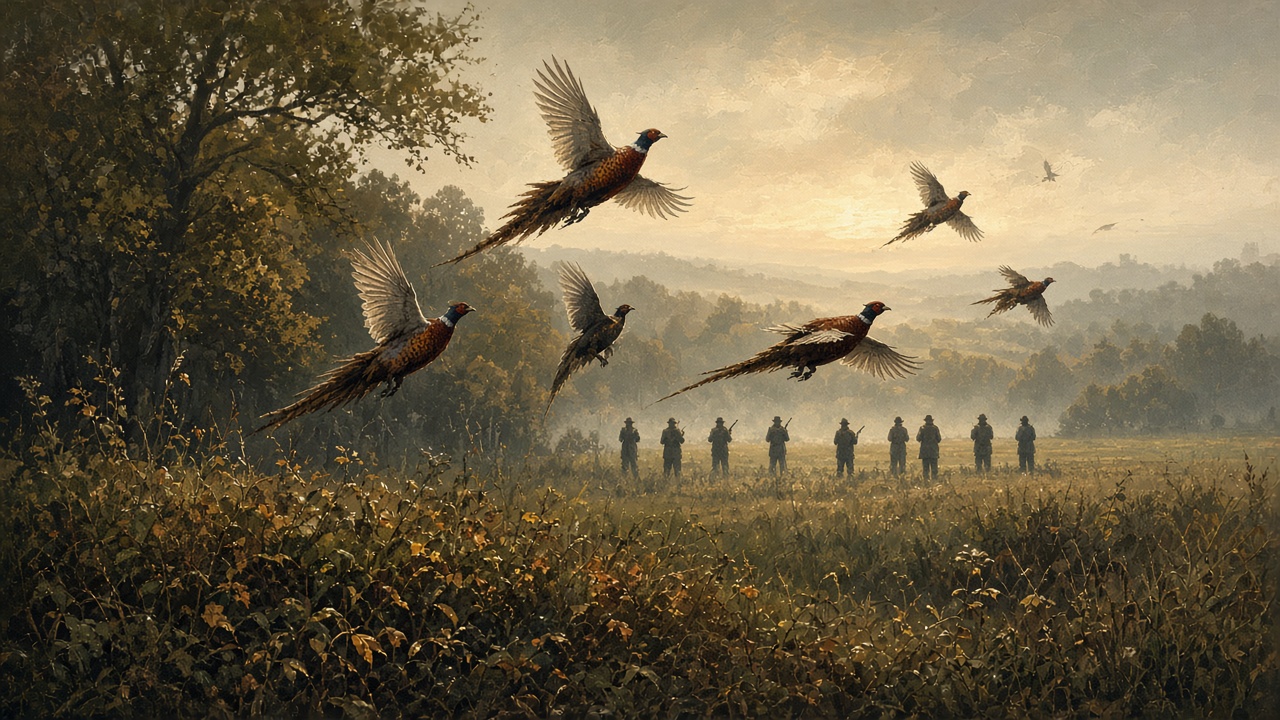
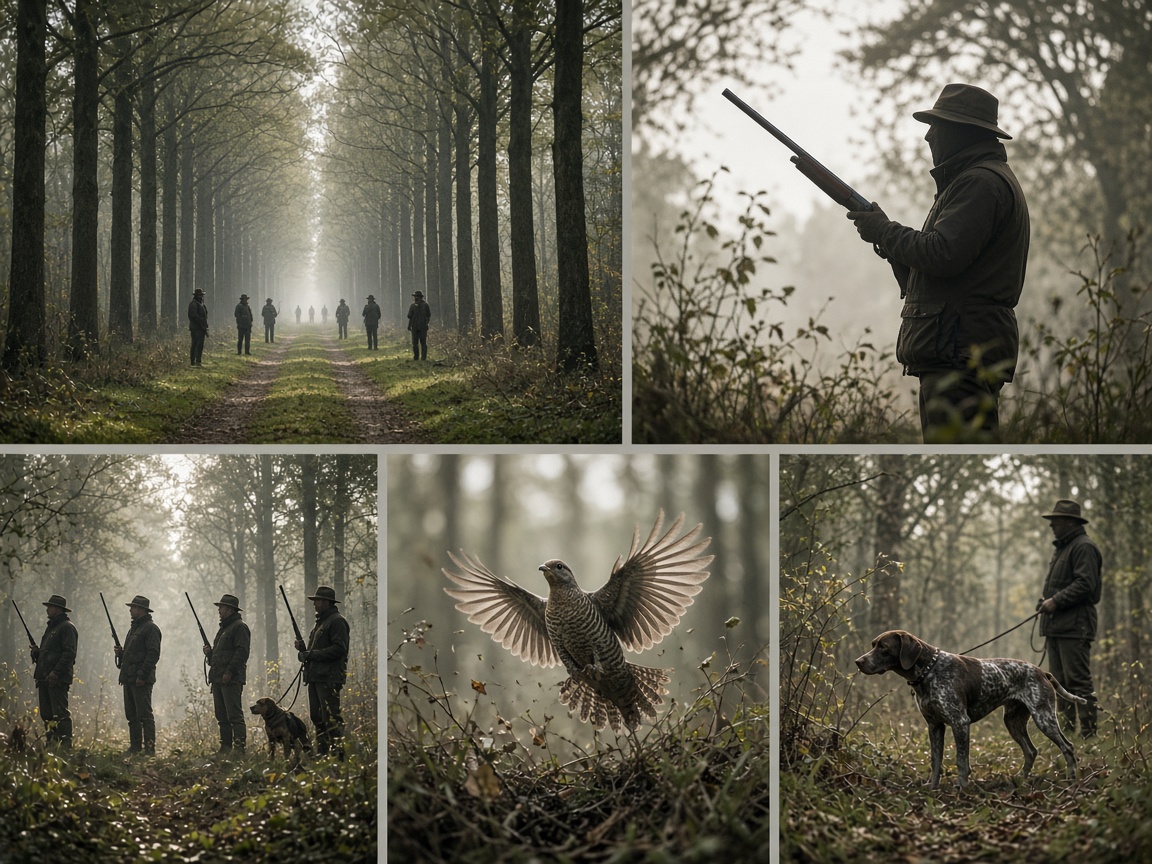
Driven shooting is the British form, with firmly set customs, of shooting birds driven over a line of guns. The team, usually invited in advance, draws peg numbers at the start of the day; at each new drive everyone moves along by a number of places announced at the briefing, so that each gun gets a turn in the middle and at the ends of the line.
Everything rests on the gamekeeper, who manages the ground all year and runs the beaters on the day. Flankers hold the sides of the drive to steer the birds, and pickers-up work behind the line with retrievers and spaniels. On some days a gun has a loader, who reloads a second shotgun while the first is being fired.
Grouse are shot differently. On the heather moors of northern England and Scotland, guns wait in butts, sunken or walled positions, and the beaters bring wild grouse towards them across the moor. Pheasants and red-legged partridges are largely reared and released, whereas red grouse are wild birds whose numbers depend on how the moor is managed; both practices are debated and the rules are changing.
How does driven shooting work in the field?
What equipment do you need for driven shooting?
- A shotgun kept in its slip between drives, and the certificate, issued by the police, needed to possess it
- Enough cartridges for the day, meeting the rules on lead shot, which is already banned on the foreshore, over listed SSSIs and for wildfowl in England and Wales, and over wetlands in Scotland and Northern Ireland; it will be banned for all live quarry in England, Scotland and Wales from 1 April 2029
- A shooting stick or folding stool for the waits during each drive
- Ear defenders and shooting glasses
Safety rules for driven shooting
- In a grouse butt, use the safety sticks or canes that stop the gun being swung towards neighbouring butts
- Never take a bird flying along the line at the height of other guns, as the Code of Good Shooting Practice makes clear
- Open the gun as soon as the drive ends and keep it open while moving between pegs
- Never swing through the line of neighbouring pegs while following a bird
Common mistakes in driven shooting
- Taking a neighbour’s birds, a breach of etiquette often raised at the briefing
- Arriving late or going to the wrong peg, which holds up the whole line
- Forgetting to tell the pickers-up about a bird that flew on wounded
- Taking a low bird at the height of beaters or neighbours
Which species are hunted by driven shooting?
Where is driven shooting practised?
England
In England, pheasant and red-legged partridge days take place on farmland and woodland estates, and driven grouse on heather moorland. Releasing pheasants or red-legged partridges on or within 500 metres of a special area of conservation or special protection area requires a Natural England licence. Lead shot is already banned for wildfowl and on the foreshore (SI 1999/2170), and the general restriction adopted in 2026 applies from 1 April 2029, subject to derogations.
Scotland
In Scotland, driven pheasant and partridge days take place on sporting estates, and driven grouse on the moor, where guns wait in butts. Since the 2024 Act, it is illegal to shoot red grouse on land not covered by a NatureScot licence; the holder must have regard to the code of practice on grouse moor management and submit an annual return of birds taken.
Rules vary by country and region: check with the local authority. See the sources
Driven shooting compared with neighbouring techniques
The driven shoot is the British application of driven game-bird shooting, with firmly established customs: moving pegs, loaders, pickers-up, butts on the moor. Walked-up shooting is different: guns walk in line with their dogs and shoot the birds they flush themselves. Retriever work remains central to both.
Key terms in driven shooting
- driven shoot
- A shooting day in which birds are driven over a line of numbered pegs.
- stand (peg)
- The position allocated to a hunter on a drive; called a peg on British driven shoots.
- beater
- A person who walks through the drive to flush game towards the guns.
- picker-up
- A handler who works retrievers behind the line to collect shot and wounded birds.
- gamekeeper
- The person who manages a shoot’s ground, habitat, game and the organisation of shooting days.
- butt
- A sunken or walled shooting position used for driven grouse on the moor.
- retriever
- A dog trained to find and bring back shot game to hand, on land or from water.
- loader
- A person who stands with a gun and reloads a second shotgun while the first one is being fired.
- bag
- The total of game shot during a day, counted by species at the end of shooting.
Frequently asked questions about driven shooting
What is driven shooting?
It is a British shooting day in which beaters drive birds over a line of guns standing at numbered pegs, across a series of drives.
What is a peg?
It is a gun’s numbered position for a drive. The number is drawn in the morning and then changes at each drive according to a rule given at the briefing.
What does the gamekeeper do?
The keeper manages the ground, habitat and game all year, prepares the drives and directs the beaters on the shooting day.
How is driven grouse shooting done?
On a driven grouse day, guns wait in butts on the moor and the beaters bring wild grouse towards them. The birds often hug the contours at speed, which is why sticks are used to limit how far the gun can swing in the butt.
Do you need a licence to shoot in the UK?
Possessing a shotgun requires a certificate from the police. A visitor from abroad usually needs a visitor’s permit applied for by their host. The process differs by nation; BASC can advise.
Is the shot game eaten?
The Code of Good Shooting Practice expects shot game to be treated as food, and British shooting organisations promote its use.
Driven shooting in pictures
Sources and references on driven shooting
- Code of Good Shooting Practice — The Code of Good Shooting Practice (consulted on )
- British Association for Shooting and Conservation (BASC) — Shooting advice and codes of practice (consulted on )
- Game & Wildlife Conservation Trust (GWCT) — Game and wildlife research (consulted on )
- legislation.gov.uk — Wildlife Management and Muirburn (Scotland) Act 2024, section 10 : licence NatureScot pour les terres où la grouse est tirée (section 16AA WCA 1981) (consulted on )
- Defra et Natural England (GOV.UK) — Gamebirds: licences to release them (England) (consulted on )
- DAERA Northern Ireland — Wildlife and game in Northern Ireland (consulted on )
- BASC — Lead ammunition (consulted on )
- legislation.gov.uk — Environmental Protection (Restriction on Use of Lead Shot) (England) Regulations 1999, SI 1999/2170, regulation 3 and Schedule 2 (consulted on )
- legislation.gov.uk — Environmental Protection (Restriction on Use of Lead Shot) (Wales) Regulations 2001, SI 2001/4003 (consulted on )
- legislation.gov.uk — Environmental Protection (Restriction on Use of Lead Shot) (Scotland) Regulations 2004, SSI 2004/289, regulations 3 and 4 (consulted on )
- legislation.gov.uk — Environmental Protection (Restriction on Use of Lead Shot) Regulations (Northern Ireland) 2009, SR 2009/168 (consulted on )
- GWCT — Compliance with the law on the use of non-lead ammunition (consulted on )
- legislation.gov.uk — REACH (Amendment) Regulations 2026, SI 2026/195 : restriction du plomb dans les munitions (consulted on )
- NatureScot — Red grouse and licensing (consulted on )
Practice information — not a legal authorisation.