Six species
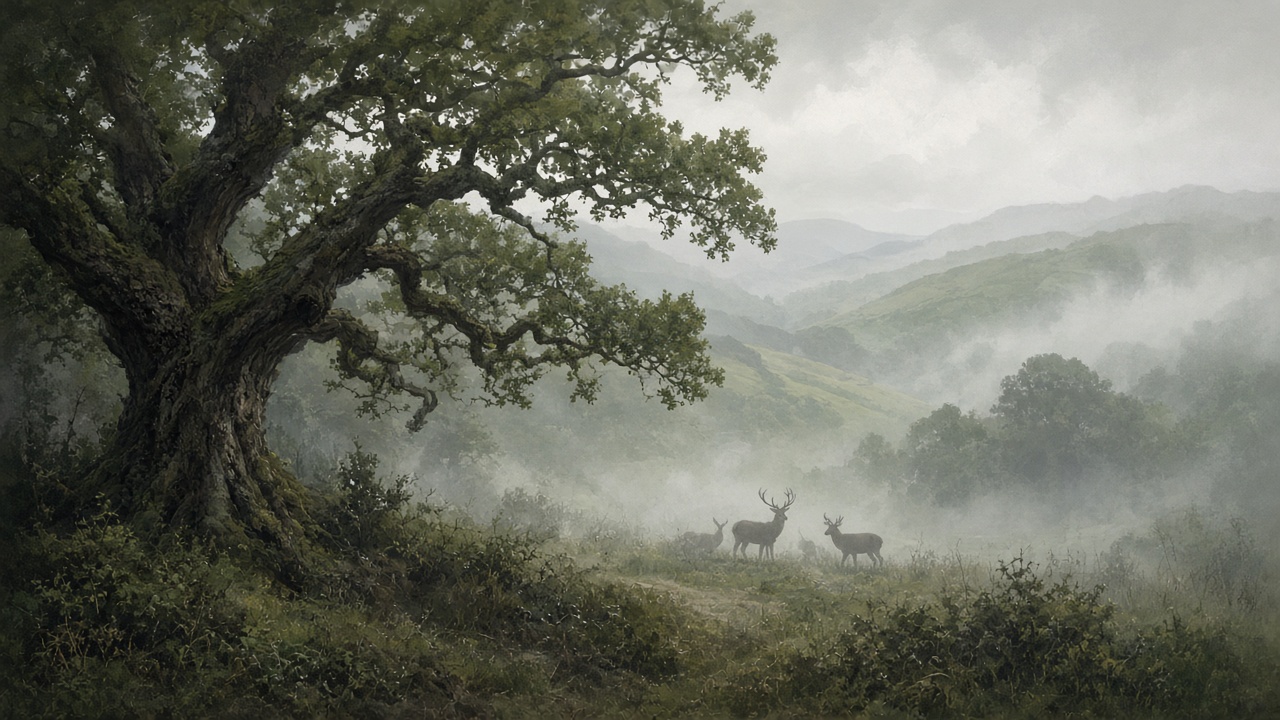
- Red deer (Cervus elaphus), native: mainly in the Scottish Highlands, but also in the Lake District, Exmoor and the New Forest.
- Roe deer (Capreolus capreolus), native: widespread in Scotland and much of England.
- Fallow deer (Dama dama), introduced in the Middle Ages: English forests and parks.
- Sika deer (Cervus nippon), introduced in the 19th century: Scotland, Dorset, Cumbria; it hybridises with red deer.
- Reeves’s muntjac (Muntiacus reevesi), introduced in the early 20th century: spreading fast in southern and central England.
- Chinese water deer (Hydropotes inermis), introduced: wetlands of eastern England, notably the Norfolk Broads.
One law per nation
| Nation | Law | Bodies |
|---|---|---|
| England | Deer Act 1991 | Natural England (licences); Forestry England (public forests) |
| Wales | Deer Act 1991 | Natural Resources Wales |
| Scotland | Deer (Scotland) Act 1996 | NatureScot; Forestry and Land Scotland (public forests) |
| Northern Ireland | Deer (Northern Ireland) Order 1985 | Department of Agriculture, Environment and Rural Affairs (DAERA) |
Close seasons
Each law sets close seasons by species and sex; they differ between Scotland and England and Wales. Muntjac, which breed all year round, have no statutory close season in England and Wales; good practice recommends targeting does without dependent young. Minimum calibres and bullet energies are also set by law.
Qualifications and management groups
Deer management qualifications (Deer Stalking Certificate levels 1 and 2) are not a general legal requirement, but public forests and landowners often require them. In Scotland, Deer Management Groups coordinate culls between neighbouring estates, with support from NatureScot.
Forests, road safety and health
Deer pressure on woodland regeneration is the main argument behind public management plans. Road collisions and the spread of muntjac in southern English woods are other issues monitored by public bodies.