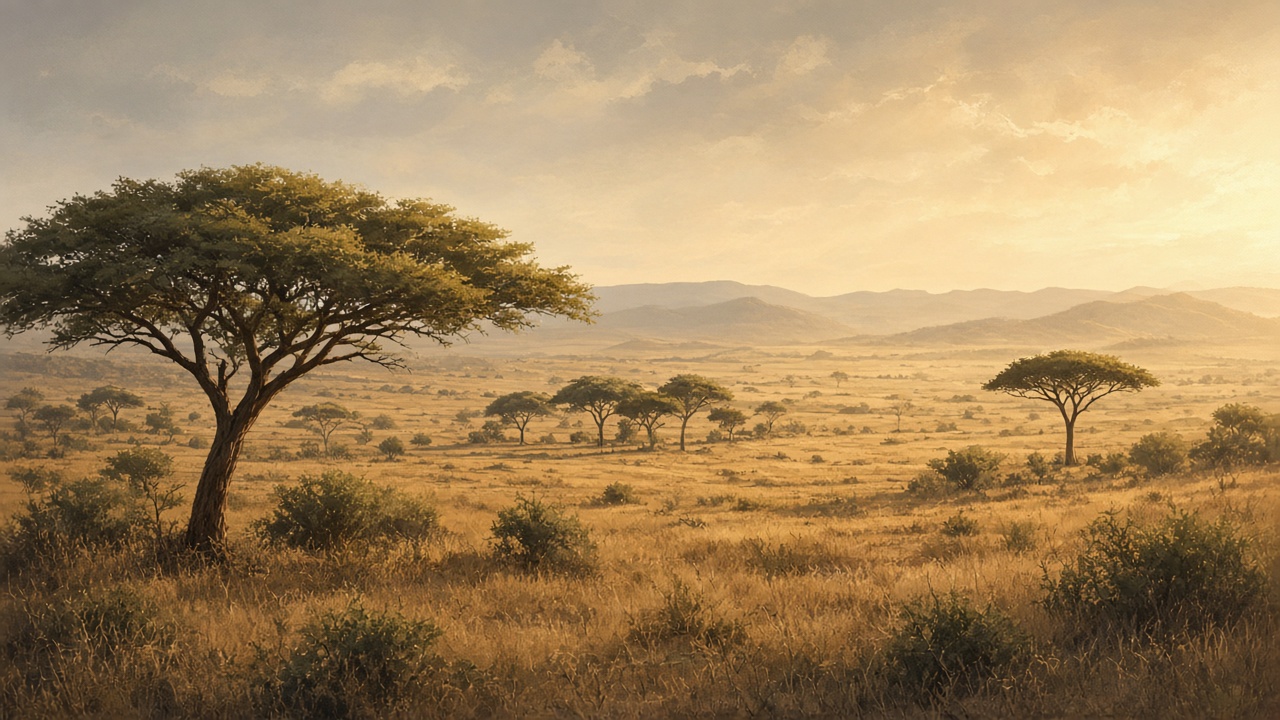
- Savanna is a tropical biome found in Africa, South America, India and Australia.
- Bushveld is a wooded savanna specific to southern Africa, not a general synonym for savanna.
- Trophic savannas on rich soils carry large herds; pyric tall-grass savannas burn often.
- Rain, fire and herbivores keep the balance between trees and grasses.
Definition and boundaries
Savanna combines a continuous grass layer with scattered trees or shrubs. The IUCN separates trophic savannas (group T4.1), on fertile soils and grazed by large herbivores, from pyric tussock savannas (T4.2), on poor soils and maintained by fire. Bushveld is a southern African wooded savanna.
Distribution
Savannas cover a large part of Africa south of the Sahara, the llanos and cerrado of South America, part of India and northern Australia. Bushveld extends mainly across northern South Africa, Botswana, Zimbabwe and southern Mozambique.
Climate
The climate is warm all year, with a distinct rainy season and dry season. In the driest savannas, rainfall directly limits tree density; above a certain rainfall level, fire and herbivores are mainly what stop the canopy from closing. In the dry season, grasses turn yellow and become highly flammable.
Soils, relief and water
Soils range from fertile volcanic or clay soils in East Africa, which favour short, nutritious grasses, to the old, leached and poor soils of many wetter savannas. Termite mounds, waterholes and seasonal rivers create patches of richer soil and different vegetation.
Structuring vegetation
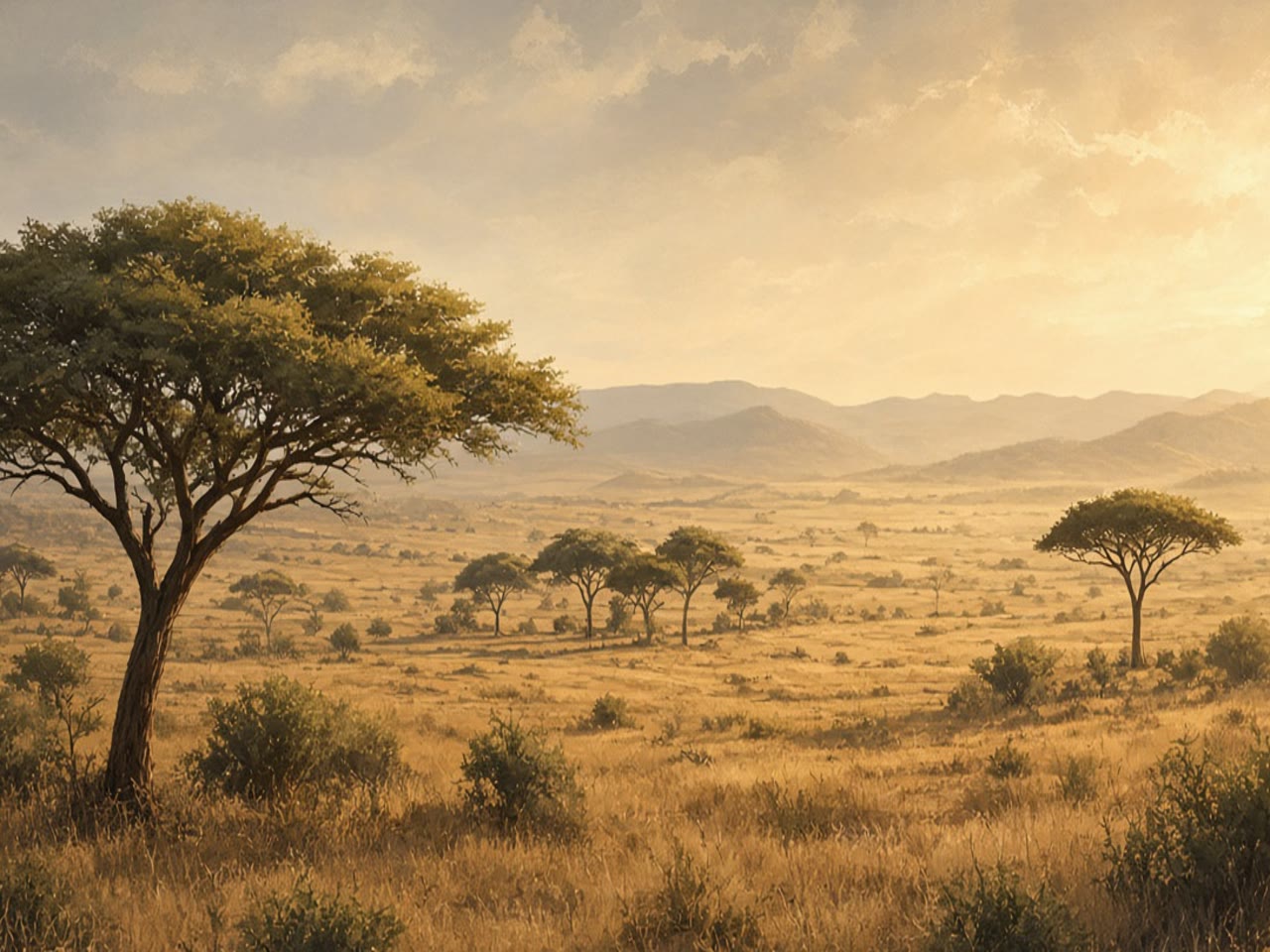
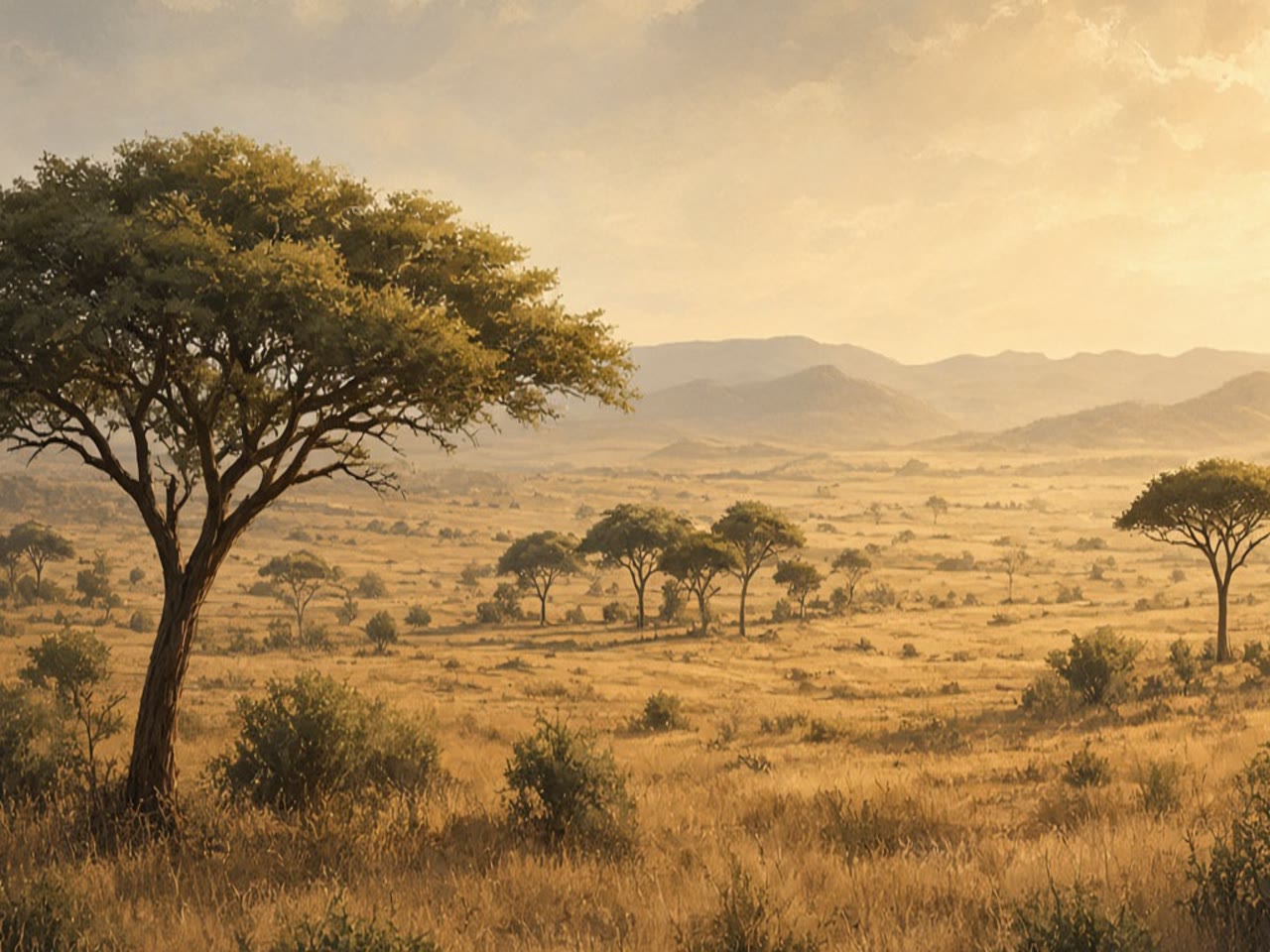
Grasses dominate the ground, short on grazed rich soils, tall and tufted on poor soils. Trees are often thorny or have compound leaves: acacias (Vachellia, Senegalia), mopane, bushwillows and baobabs in Africa. Bushveld has denser shrub and tree cover than open grassy savannas.
Characteristic fauna
African savannas hold the greatest diversity of large land mammals: savanna elephant, giraffe, zebras, buffalo, wildebeest, hartebeest and many antelopes. Lion, cheetah, leopard, African wild dog and spotted hyena are their predators. Bushveld is also home to greater kudu, impala and white rhinoceros.
Functioning and dynamics
Trees and grasses are in constant competition. Fire, frequent in the dry season, kills young trees and favours grass; elephants knock down or strip trees; overgrazing, by contrast, can encourage bush encroachment. Large herbivores follow the rains and the regrowth after fire.
Threats
Conversion to crops and pasture, poaching and fragmentation by fences and roads reduce the space available to large mammals. Bush encroachment spreads where fire is suppressed. Conflicts between wildlife and herders or farmers are frequent on the edges of protected areas.
Field reading
In the dry season, wildlife gathers near waterholes and rivers; in the rainy season, it disperses. Recently burned areas draw herbivores to the regrowth. Midday heat reduces activity: dawn and late afternoon are the best times for observation.
This sheet describes a habitat. It publishes no season, quota or hunting authorisation: those rules must be checked with the competent authorities of the territory concerned.
Documented gaps
- Savannas in South America, India and Australia are only mentioned.
- No population figures for large mammals.
- Savanna birds are not linked to species sheets.
Sources
- IUCN Global Ecosystem Typology — T4.1 Trophic savannas (consulted 2026-11-04)
- IUCN Global Ecosystem Typology — T4.2 Pyric tussock savannas (consulted 2026-11-04)
Related species
Related techniques
Practice information — not a legal authorisation.
Frequently asked questions
Is bushveld a savanna?
Yes, it is a wooded savanna of southern Africa, with more trees and shrubs than the grassy savannas of East Africa.
Why does savanna not turn into forest?
The dry season, fire and herbivores, especially elephants, stop trees from closing the canopy.
Are savanna grasses always tall?
No. They are short on heavily grazed fertile soils and tall mainly in wetter savannas on poor soils, where fire passes often.
Does this sheet authorise hunting in this habitat?
This sheet describes a habitat. It publishes no season, quota or hunting authorisation: those rules must be checked with the competent authorities of the territory concerned.
Gallery
Keep exploring
Connect this environment to documented species, techniques and other habitats — without confusing ecological description with hunting authorisation.