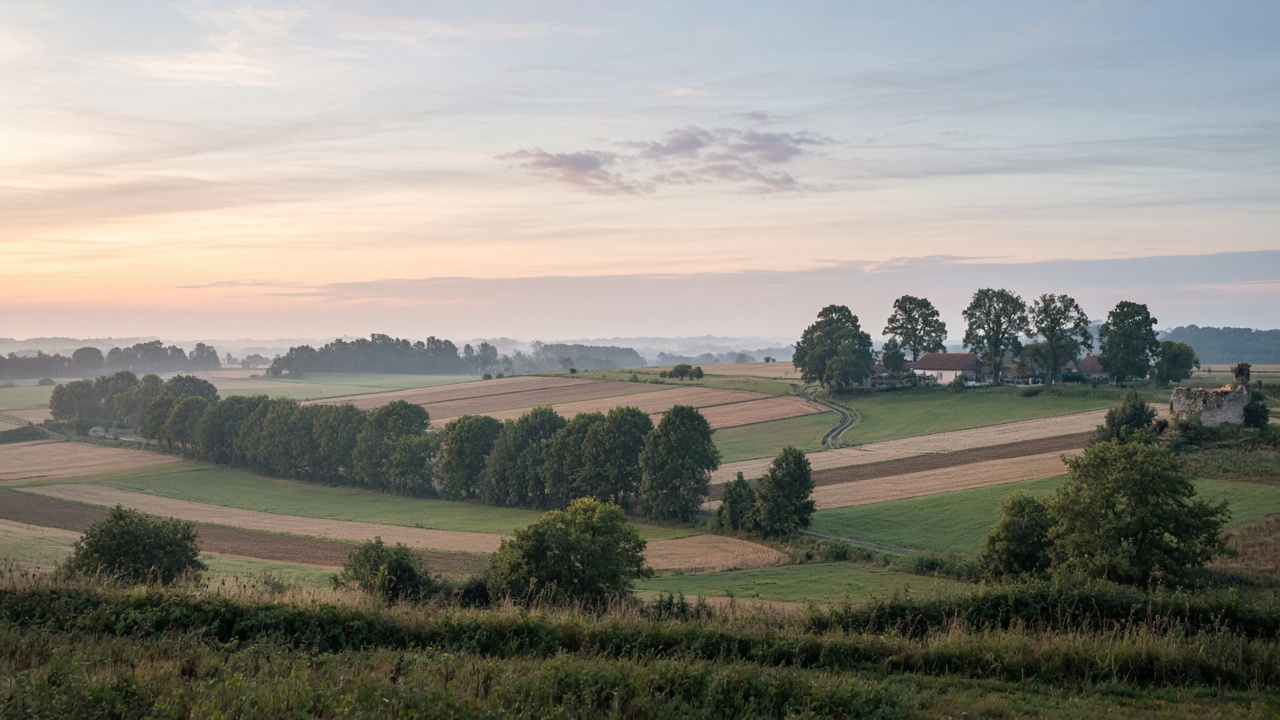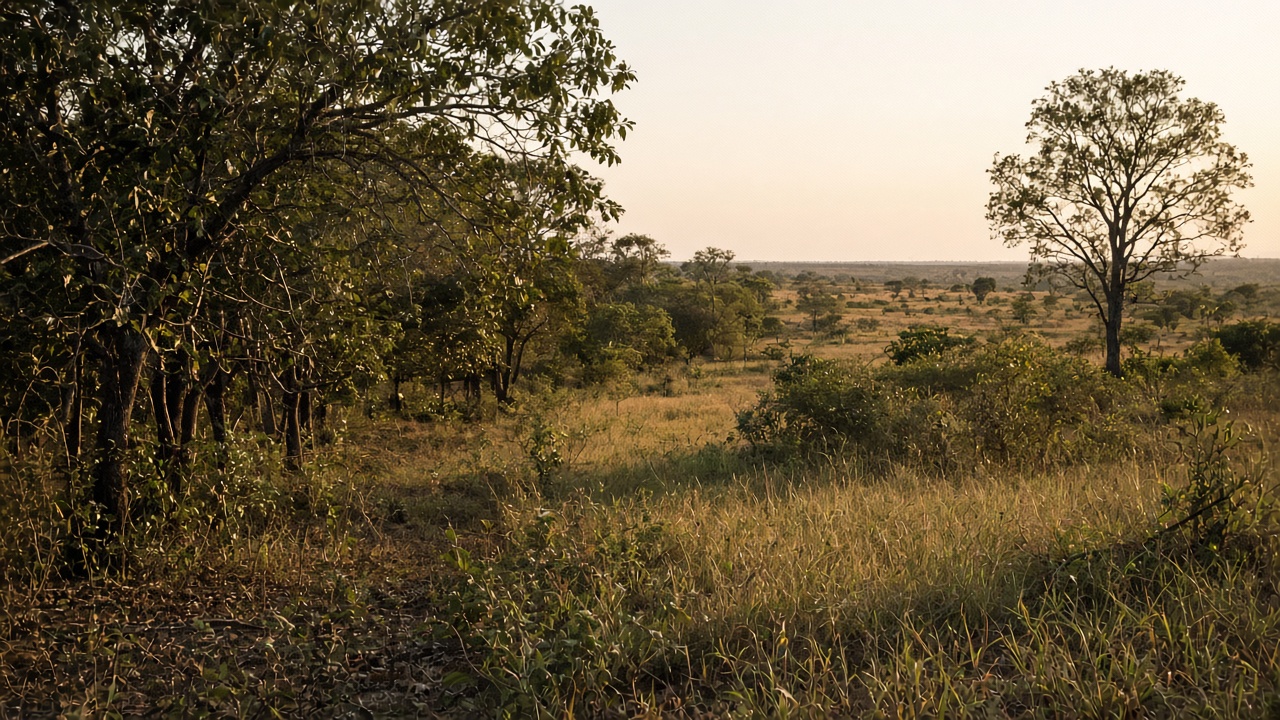
Hunting landscapes
Brazil spans the Amazon, the Cerrado, the Atlantic Forest, the Pantanal and the southern grasslands (pampa). Wild boar, an invasive alien species, has spread mainly in the agricultural South and Centre-West.
Key species
- Wild boar (Sus scrofa)
- Capybara (Hydrochoerus hydrochaeris)
- Jaguar (Panthera onca)
Main hunting methods
- wild boar control (manejo do javali)
- subsistence hunting (caça de subsistência)
Wildlife health
Wild boar can transmit diseases to pig farms, hence the health surveillance carried out by the Ministry of Agriculture. Brazil has not reported African swine fever.
Who owns wildlife: Law 5,197 of 1967
Law no. 5,197 of 3 January 1967 sets the starting rule (updated text, Chamber of Deputies). Under article 1, wild fauna belongs to the State: its use, pursuit, destruction, hunting or capture are prohibited. Article 2 bans professional hunting and article 3 the trade in specimens and hunting products. Article 1 (§2) also lets a landowner forbid hunting on their land. Article 10 adds bans on methods and timing: poison, traps that cause suffering, shooting at night or from a vehicle, and hunting out of season. For a traveller the consequence is plain: there is no sport hunting licence in Brazil, and no hunting trip for native species can rest on this text.
A continent-sized country, six biomes
The IBGE, Brazil’s statistics institute, divides the territory into six biomes (biome map, 30 October 2019): the Amazon covers 49.5% of the country, the Cerrado 23.3%, the Atlantic Forest 13%, the Caatinga 10.1%, the Pampa 2.3% and the Pantanal 1.8%. Wild boar has not spread evenly: IBAMA’s national plan (executive summary, 2019) places it mainly in the South, Southeast and Centre-West, present in 1,536 municipalities and 22 federative units in 2019. Its first record in Brazil dates from 1961 and its spread accelerated in the 1990s, partly because of irregular farming. The document notes that the worst crop damage affects maize, up to 100% of the harvest on some small farms.
Wild boar control: what IBAMA sets
For wild boar, an exotic species, the rule is different: it is called “control”, not hunting. IBAMA Normative Instruction no. 3 of 31 January 2013 declares wild boar harmful and authorises its control nationwide (articles 1 and 2). In its 2013 version it sets no quota and no season (art. 4), bans selling products from an animal killed in the wild (art. 5) and suspends new boar farms (art. 8). Control on private land needs the owner’s consent, and in a protected area the manager’s agreement (art. 2, §8 and §9).
Normative Instruction no. 12 of 25 March 2019 (published 4 April 2019) changed the procedure: an electronic system, SIMAF, issues the authorisation, valid for three months, on a simple declaration. The controller must be registered with IBAMA’s Federal Technical Register (code 21-58), carry photo ID, the SIMAF authorisation and a certificate of good standing, and file a report at the end of each operation. Dogs are allowed of any breed, with an identified harness, a veterinary certificate and an up-to-date vaccination record; bladed weapons are allowed, while lethal traps or traps tied to a firearm are banned. According to the Brazilian Confederation of Agriculture (CNA), this was an expected relaxation after six years under the 2013 rule. We read the 2013 and 2019 texts; the consolidated version in force should be checked on IBAMA’s website.
Firearms: the army’s side
The firearm falls under a different regime. Decree no. 11,615 of 21 July 2023 provides for an “exceptional hunt” reserved for controlling an invasive species (art. 39): it requires an IBAMA document naming the species, the area, the landowners’ consent and an end date, plus a registration (CR) with the Army Command. The ceiling is six firearms, no more than two of restricted use, and 500 rounds a year per firearm. Subsistence hunting (art. 40) is reserved for people over 25 living in rural areas, with a single smoothbore firearm of 16 gauge or smaller. The text does not name wild boar; it was partly amended by Decree 12,345 of 30 December 2024, so the version in force needs checking.