- Family
- Collective big-game hunting
- Difficulty
- Moderate on the stand but demanding: a long wait, running animals, dogs at work in the cover
- Organisation
- A large organised group: the organiser, postores, perreros with their rehalas, hunters spread across armadas
- Key gear
- A rifle, bright clothing, a stand seat, binoculars
- Season
- Varies by species and autonomous community: check with the regional hunting service
- Who it suits
- Hunters used to rifle shots at running game who are ready for a long day on the stand
What is the idea behind the montería?
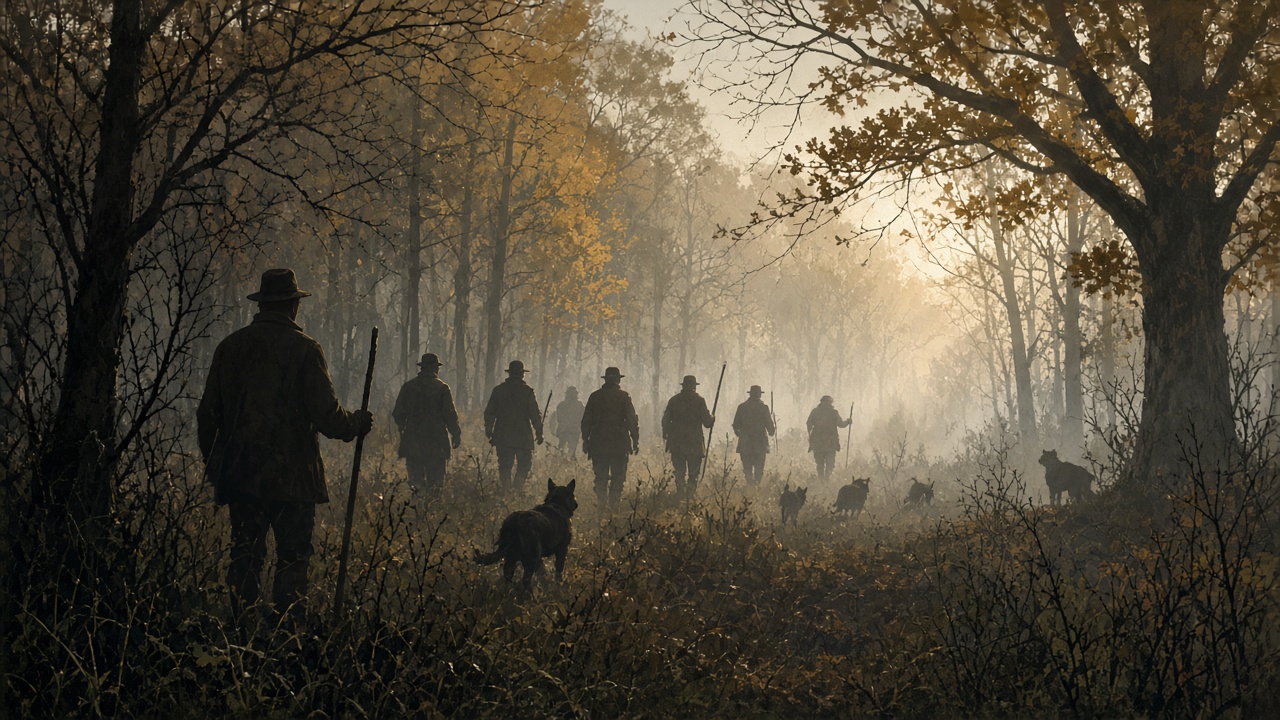
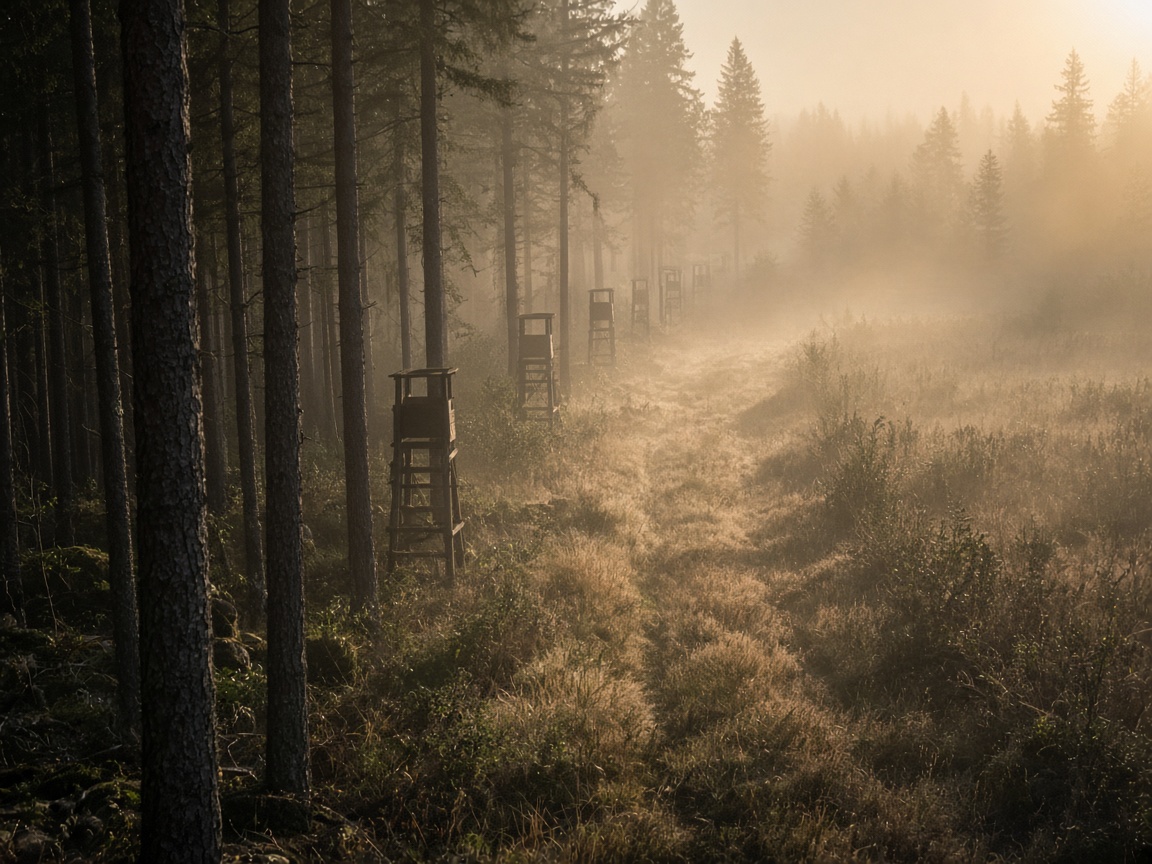
What sets the montería apart is its scale. The mancha often takes in a large part of a range of hills under Mediterranean scrub or woodland. The stands, called puestos, are grouped into several armadas: an armada is the full set of stands lined up along one track, ridge or edge, not a single stand. Each hunter keeps the same stand for the whole hunt.
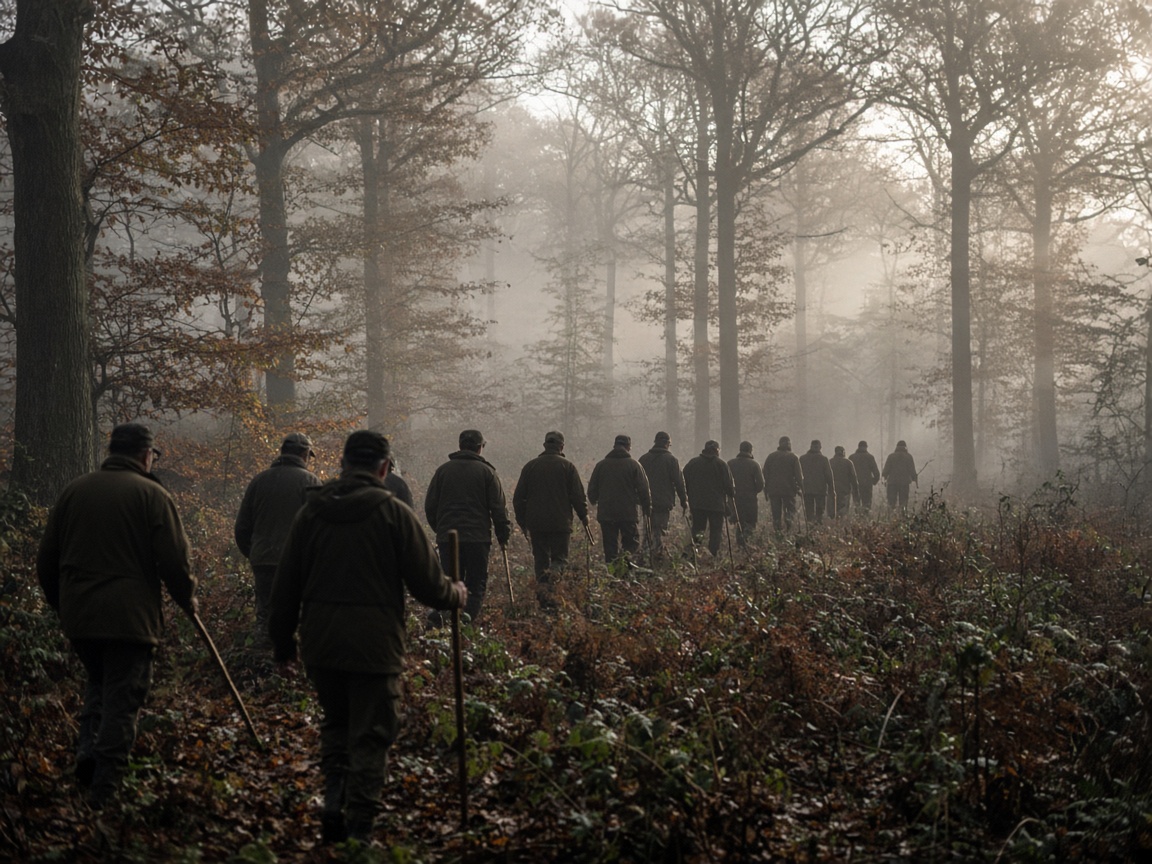
The day follows a set order. Hunters meet in the morning, often over breakfast, then attend the sorteo, the drawing of stands. The postores then lead each armada into position. At the signal, the perreros release their rehalas from different points around the mancha; the dogs search and flush the game, which breaks towards the armadas. At the end of the day, the shot animals are brought together for the junta de carnes.
The rehalas are the heart of the montería: each perrero works a pack in a given sector. Hunters therefore shoot in a setting where dogs and handlers can appear at any moment, which calls for complete identification of the animal and constant attention to shooting sectors. Some estates (fincas) are fenced; the status of such ground and the conditions for holding a montería are set by each autonomous community.
How does the montería work in the field?
What equipment do you need for the montería?
- A rifle and big-game ammunition that meet the rules of the autonomous community
- A light stand seat and clothing for a long wait, from the cold early morning to the midday heat
- Binoculars to identify an animal in the scrub before you shoot
- Bright clothing that every participant can see
Safety rules for the montería
- Never shoot towards the stands of your own armada or a neighbouring one, and keep to the sectors the postor has shown you
- Dogs often come out right behind the game: wait until the animal is clear of the pack before firing
- Keep the rifle unloaded when moving by vehicle or along tracks, both before and after the hunt
- Follow the briefing given before the start, including the signals that open and close each drive
Common mistakes in the montería
- Taking a long shot at a running animal, beyond the range you can handle
- Making noise or fidgeting on the stand during the long wait
- Going after a wounded animal without telling the organisers and the perreros
- Leaving or moving your stand without the organiser’s agreement or telling your neighbours
Which species are hunted by the montería?
Where is the montería practised?
Spain — Castilla y León
In Spain, monterías are held mainly in the Sierra Morena, the Montes de Toledo, Extremadura and other sierras of central and southern Spain, for wild boar, red deer and fallow deer. Rules are set by each autonomous community: prior permission for, or notice of, the montería, the estate’s technical hunting plan, high-visibility clothing, the status of rehalas and of fenced ground. The regional hunting federation and the community’s hunting service explain these conditions.
Rules vary by country and region: check with the local authority. See the sources
The montería compared with neighbouring techniques
The montería and the drive share the idea of pushing game towards standing hunters, but a montería uses several rehalas over a large mancha, draws stands by lot and often lasts all day, whereas a drive hunt works through a series of smaller blocks with beaters on foot. Iberian rececho is the opposite approach: a hunter alone or with a guide closes in on a chosen animal, with no dogs and no stands.
Key terms in the montería
- montería
- A large Spanish collective big-game hunt with lines of stands and packs of dogs working the cover.
- armada
- In a montería, a line of stands along a track, a ridge or the edge of the cover.
- rehala
- A pack of dogs used in a montería, handled by a perrero (dog handler).
- drive (area)
- The block of ground covered in one go during a drive, and the beaters’ sweep through it.
- stand (peg)
- The position allocated to a hunter on a drive; called a peg on British driven shoots.
- sorteo
- The drawing of stands among the hunters on the morning of a montería.
- postor
- The guide who leads the hunters of an armada to their stands and shows them the limits of each one.
- junta de carnes
- The gathering of the shot animals at the end of a montería, where the day’s bag is reviewed.
Frequently asked questions about the montería
What is the montería?
It is a Spanish collective big-game hunt in which rehalas work through a large mancha to push game towards fixed stands, grouped in armadas around the area being hunted.
How does a montería differ from a drive?
A montería is bigger: more stands, several rehalas, a drawing of stands and a day built around one large mancha. A drive covers smaller blocks in turn, with beaters on foot.
What is an armada?
It is a line of stands set along one track, ridge or edge. A montería has several, each led into place by a postor.
How are stands allocated?
Usually by lot, in the sorteo on the morning of the hunt. Customs vary: some organisers reserve stands or allocate them in other ways.
What is a rehala?
It is a montería pack, handled by a perrero, that works one sector of the mancha. How rehalas are organised and registered differs between autonomous communities.
Can visitors from abroad take part in a montería?
Yes, many monterías welcome foreign hunters. You generally need a hunting licence from the autonomous community, insurance and the documents required for your rifle; the organiser and the regional federation can advise.
The montería in pictures
Sources and references on the montería
- Boletín Oficial del Estado (BOE) — Legislación estatal y autonómica de caza (consulted on )
- Real Federación Española de Caza (RFEC) — Modalidades, licencias y federaciones autonómicas (consulted on )
- Ministerio para la Transición Ecológica y el Reto Demográfico (MITECO) — Caza y biodiversidad (consulted on )
- Real Sociedad Canina de España (RSCE) — Razas y pruebas de trabajo de perros de caza (consulted on )
- Boletín Oficial del Estado (BOE) — Ley 4/2021, de 1 de julio, de Caza y de Gestión Sostenible de los Recursos Cinegéticos de Castilla y León (texto consolidado) : arts. 32-40, 50-51 y anexo III (modalidades) (consulted on )
- Procuradoria-Geral Distrital de Lisboa — Decreto-Lei n.º 202/2004, de 18 de agosto (versão consolidada, DL 71/2024) : art. 84.º, 86.º, 88.º, 90.º (consulted on )
Practice information — not a legal authorisation.