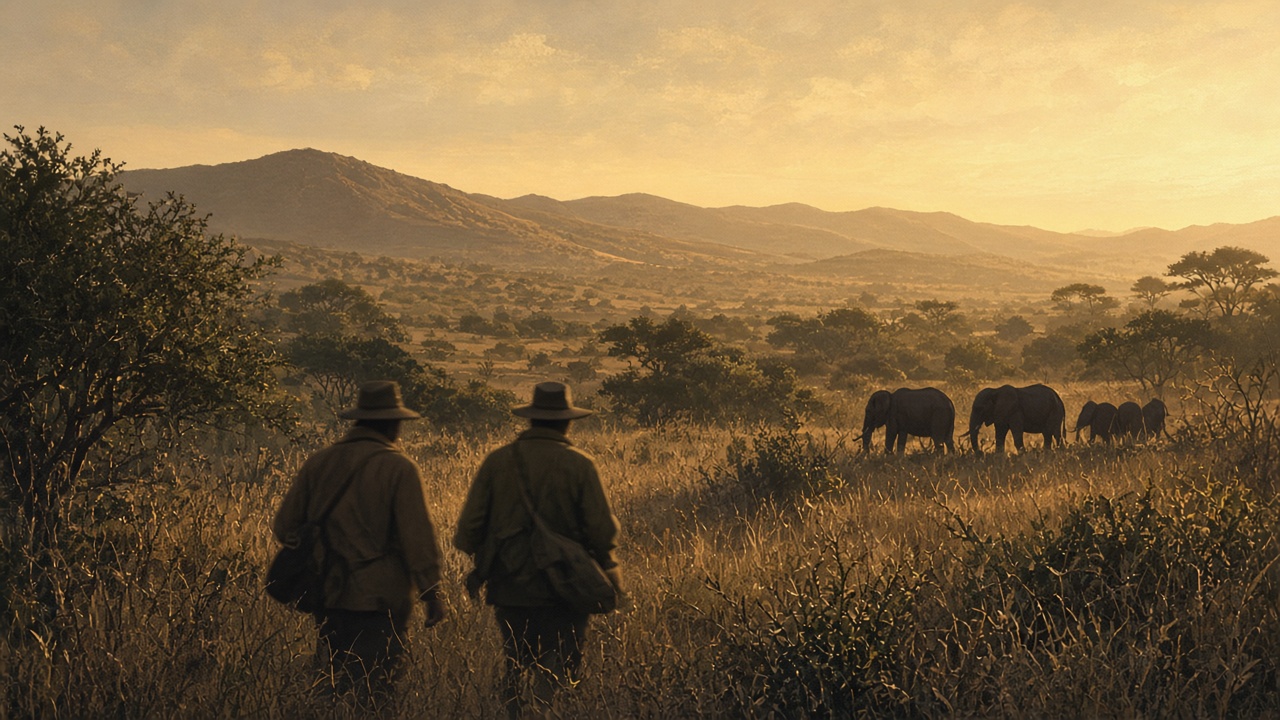
- Family
- Guided safari
- Difficulty
- Moderate to high depending on species and terrain: walking, shooting off sticks, heat
- Organisation
- A client or small group with a professional hunter and trackers, often joined by non-hunting companions
- Key gear
- Zeroed rifle or bow depending on the method, shooting sticks, binoculars, travel documents
- Season
- Varies by province and species: check with the outfitter and the provincial authority
- Who it suits
- Hunters new to Africa, or who want to hunt several antelope species on one trip
What is the idea behind a plains-game safari?
In southern Africa, plains game means the species hunted apart from the large dangerous animals. The term does not refer to a single landscape: kudu live in thickets and hills, springbok and gemsbok in dry open country, impala on the edges of wooded savanna. One trip can therefore cover very different terrain depending on the species sought.
Most of these hunts take place on game ranches, private properties where wildlife is managed for hunting, tourism or breeding. Many are fenced, with very varied sizes and conditions. Hunting within fences is debated: some see it as wildlife management comparable to extensive farming, others as falling short of fair chase where the area is small. Provincial rules govern these properties.
On the ground, methods are combined: stalking on foot from tracks or after spotting from a vehicle, waiting at a waterhole and sometimes bowhunting, where it is permitted. Meat is usually used on the property or sold locally. The contract with the outfitter sets out the species planned, the length of stay, what is included and the trophy formalities.
How does a plains-game safari work in the field?
What equipment do you need for a plains-game safari?
- Binoculars and, where local rules allow, a rangefinder for judging distance in open country
- Copies of permits, rifle documents and the contract, kept apart from the originals
- A small rucksack for water, ammunition and a first-aid kit
- Neutral-coloured clothing for midday heat and cold mornings
Safety rules for a plains-game safari
- Follow the professional hunter’s rules on the vehicle: rifle unloaded while driving, muzzle always pointing in a safe direction
- Find out before the trip about health risks in the region and the medical care available
- Keep clear of a shot animal until the professional hunter confirms it is dead
- The professional hunter decides on the shot; the client fires only with their agreement
Common mistakes in a plains-game safari
- Trying to take too many species in too few days, at the expense of the hunting itself
- Arriving without having checked trophy import formalities in your own country
- Neglecting fitness for terrain harder than expected, such as kudu hills
- Arriving without having practised off shooting sticks
Which species are hunted by a plains-game safari?
Where is a plains-game safari practised?
Namibia
In Namibia, trophy hunting of common game requires a trophy hunting permit from the Ministry of Environment (MEFT). The regulations require the hunter to be accompanied by a registered guide.
South Africa
In South Africa, the national TOPS Regulations govern the hunting of listed threatened or protected species, including through specific permits for registered game farms. They prohibit hunting such an animal when it is trapped against a fence or held in a small enclosure where it has no fair chance of evading the hunter; rules for other species are a provincial matter.
Northern Cape (South Africa)
In the Northern Cape, the 2009 Nature Conservation Act prohibits several hunting methods unless a permit is held, including shooting an animal trapped against a fence or in an enclosure with no fair chance of escape, hunting in an area smaller than the standard set by the Act, hunting at night and hunting from a vehicle. Acting as a professional hunter or hunting contractor requires a provincial permit.
Rules vary by country and region: check with the local authority. See the sources
A plains-game safari compared with neighbouring techniques
A plains-game safari is a type of trip, whereas a walk-and-stalk safari is a method that can apply to any species, dangerous game included. A plains-game trip may include days of stalking on foot, but also waiting at waterholes or bowhunting. Stalking as practised in Europe is good preparation in fieldcraft and shooting off a rest before a first trip.
Key terms in a plains-game safari
- plains game
- In southern Africa, antelope and other species hunted apart from the large dangerous animals.
- professional hunter (PH)
- A licensed guide who runs the hunt and is responsible for the client in the field.
- tracker
- A team member who reads spoor and follows the animal with the professional hunter.
- game ranch
- In South Africa, a private property where wildlife is managed for hunting, tourism or breeding, often fenced.
- shooting sticks
- A stick, bipod or tripod used as a rest for the rifle when shooting standing or sitting.
- stand hunting
- Waiting motionless at a chosen spot on a game trail or near an area that game uses.
- hunting bow
- A longbow, recurve or compound bow with enough draw weight for the quarry under local rules.
Frequently asked questions about a plains-game safari
What is a plains-game safari?
It is a hunting trip in southern Africa devoted to antelope and other non-dangerous species, organised by an outfitter with a professional hunter, usually on private land.
Which species are hunted as plains game?
Among the most common in South Africa are impala, springbok, greater kudu, gemsbok, blue wildebeest and warthog. The species available depend on the province and the property.
What is a game ranch?
It is a private property where wildlife is managed for hunting, tourism or breeding. Many are fenced; their size and how they are run vary widely from one ranch to another.
Can plains game be hunted with a bow?
Yes, bowhunting for plains game is practised in South Africa, often from a hide at a waterhole. Conditions depend on provincial rules and the outfitter.
Do you need to bring your own rifle?
Not necessarily: many outfitters lend or hire out rifles. Bringing your own involves temporary import formalities that should be prepared well in advance with the outfitter.
What happens to the meat and trophies?
Meat is generally used on the property or locally. The trophy is prepared and then exported under animal health rules and, for some species, CITES; the destination country also has its own requirements.
A plains-game safari in pictures
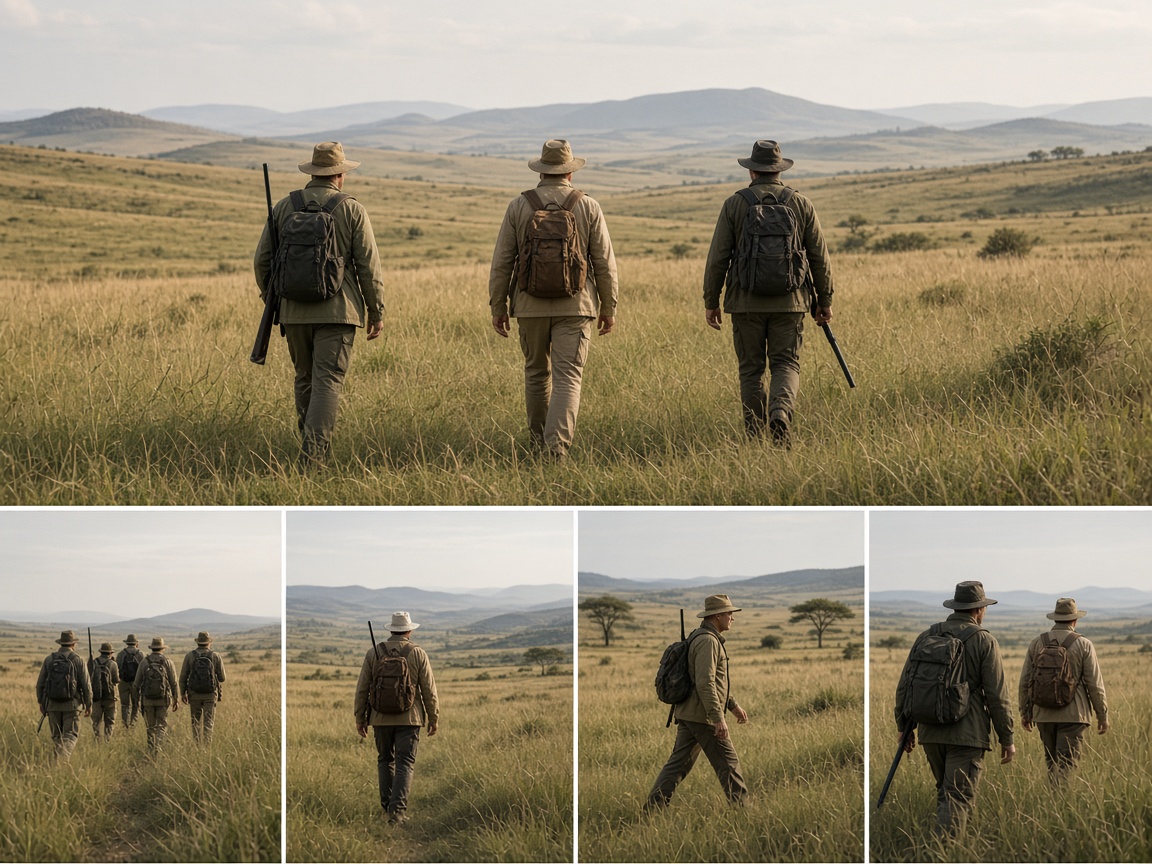
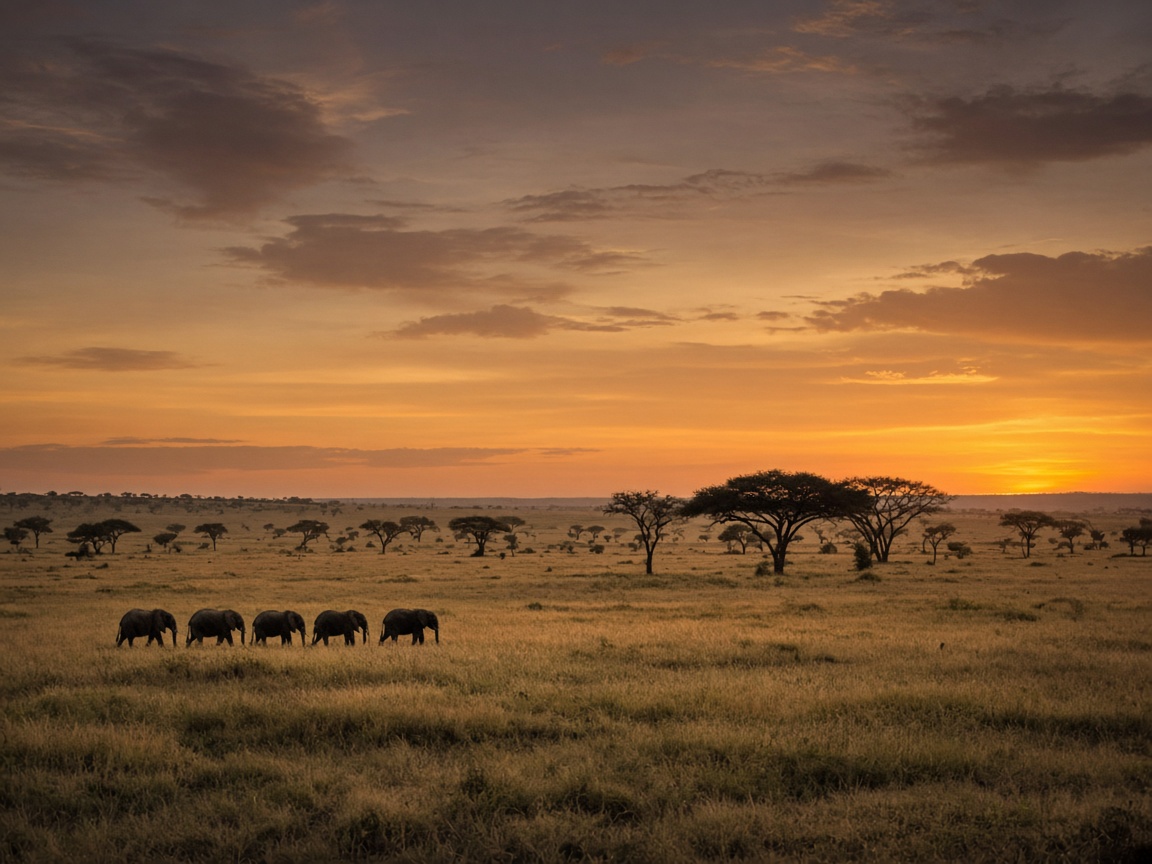
Sources and references on a plains-game safari
- Professional Hunters’ Association of South Africa (PHASA) — Professional hunting in South Africa (consulted on )
- Department of Forestry, Fisheries and the Environment (DFFE) — Biodiversity, hunting and permits in South Africa (consulted on )
- Bowhunting.co.za — Bowhunting in South Africa (consulted on )
- CITES — Convention on International Trade in Endangered Species
- Government Gazette of the Republic of Namibia n° 1580 (hébergé par le Legal Assistance Centre) — GN 119 of 1997 modifiant les Regulations relating to Nature Conservation : règl. 111 (accompagnement du trophy hunter) et 114(1)(b) (consulted on )
- Department of Forestry, Fisheries and the Environment (DFFE) — NEMBA : Threatened or Protected Species Regulations, 2007 (GN R152, Gazette 29657), règl. 12, 21 et 26 (consulted on )
- Province du Cap-Nord (texte publié par Laws.Africa / lawlibrary.org.za) — Northern Cape Nature Conservation Act 9 of 2009, art. 9 (méthodes de chasse prohibées sans permis) et art. 27 (consulted on )
Practice information — not a legal authorisation.