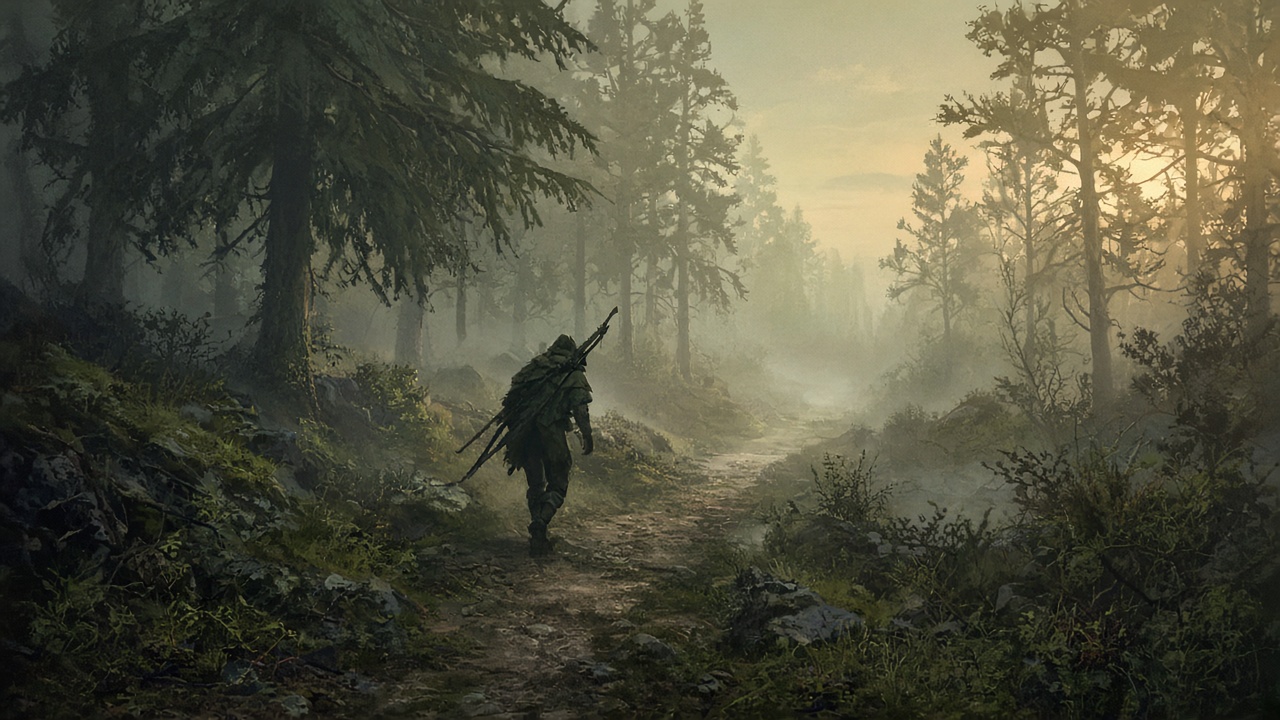
- Family
- Mobile hunting on foot
- Difficulty
- High: you need to read the wind, stay patient and shoot accurately off a rest
- Organisation
- Alone or with a stalker, rarely more than two people
- Key gear
- Binoculars, shooting sticks, a zeroed rifle, quiet boots
- Season
- Varies by species, country and region: check with the local authority
- Who it suits
- Confident rifle shots who enjoy long periods of watching
What is the idea behind stalking?
Stalking is about beating three senses: smell, hearing and sight. You keep the wind in your face, put your feet where nothing snaps and stop often behind cover to look. Success depends less on how far you walk than on how long you spend glassing before you move.
In the hills, thermals matter as much as the wind: early in the morning and in the evening cool air flows downhill, and once the sun warms the slopes it rises. You approach from above or below depending on the time of day. In woodland visibility is short and noise decides the stalk; on open ground it is dead ground and folds that hide your outline.
The shot is only one stage. Before firing, you confirm species, sex and age if you are culling to a plan, check the backstop and take a steady rest. After the shot, you watch for shot signs and wait before walking to the shot site.
How does stalking work in the field?
What equipment do you need for stalking?
- Bright binoculars, and a rangefinder where local rules allow it
- Shooting sticks or a bipod for a stable shot standing or sitting
- Quiet footwear and clothing that does not rustle
- A knife, gloves and a bag or game bag to carry what you shoot
Safety rules for stalking
- Move with the rifle unloaded or the chamber empty, and chamber a round only once you are set up to shoot
- Never shoot an animal on a skyline: with no backstop the bullet can travel a very long way
- Identify the animal and what lies behind it before every shot, never a shape or a movement
Common mistakes in stalking
- Getting upwind of an animal while circling round it to save time
- Shooting at a distance you have never practised on the range
- Moving too fast instead of spending longer glassing
- Setting out without knowing the boundaries of the ground you are allowed to hunt
Which species are hunted by stalking?
Where is stalking practised?
Croatia
The regulation lists šuljanje among individual hunting methods, with calling (vabljenje), waiting (doček) and approach by horse cart or slow boat.
England
In England, deer stalking mostly takes place in woodland and along field edges. The Deer Act 1991, which applies only to England and Wales, sets close seasons by species and sex, and Natural England issues licences for shooting out of season or at night. The BASC and British Deer Society stalking code covers safe shooting and the follow-up after the shot.
France
In France, stalking (approche) is mainly practised on roe deer, red deer, Alpine chamois and Pyrenean chamois (isard). Deer and mountain ungulates are shot under a cull plan that allocates tags to each estate; the departmental hunting federation and the OFB explain local rules.
Germany
In Germany, stalking is called Pirsch: the hunter moves slowly and silently towards the game, keeping a constant eye on the wind. The German Hunting Association (DJV) describes it, together with the Ansitz (waiting at a stand), as one of the ways of hunting alone; species and seasons are set by federal law and by each federal state (Land).
Hungary
The decree lists cserkelés among individual hunting methods, alongside les (stand hunting) and barkácsolás. Binoculars are compulsory for individual big-game hunting.
Namibia
In Namibia, a visiting trophy hunter always hunts with a registered professional hunter, master hunting guide or hunting guide. For predators hunted as trophies, the regulations allow stalking, tracking and ambush, but not the use of dogs or horses.
Portugal
Portuguese law recognises stalking (aproximação). Hunting is in principle limited to daylight, but stalking big game, wild boar included, is exempt from that time limit.
Scotland
In Scotland, stalking takes place in woodland and on the open hill, often on sporting estates with a professional stalker. Deer management falls under the Deer (Scotland) Act 1996 and NatureScot, which publishes the Code of Practice for Deer Management; the Scotland-specific Wild Deer Best Practice guides cover shooting, follow-up and carcass extraction.
South Africa
In South Africa, walk-and-stalk hunting targets antelope such as greater kudu; visiting hunters are accompanied by a professional hunter. Permits and conditions are set by provincial authorities; PHASA provides information on guided hunting.
Spain — Castilla y León
In Spain, stalking is called rececho. It is popular in the mountains for Iberian ibex and Pyrenean chamois (sarrio), and also for roe and red deer. Rules are set by the autonomous communities, and hunting often takes place in reserves or on hunting estates (cotos) with a guide.
Rules vary by country and region: check with the local authority. See the sources
Stalking compared with neighbouring techniques
Stalking is mobile, whereas stand hunting waits for game to come to a fixed spot. It takes more fieldcraft but lets you choose the animal. Iberian rececho is the Spanish form, often in mountain country. Walk-and-stalk safaris in southern Africa follow the same principle with a professional hunter and trackers.
Regional forms of stalking
- Iberian rececho Iberian rececho is the Spanish form of stalking, practised mainly in the mountains for Iberian ibex and Pyrenean chamois, and also for red and roe deer.
- Mountain hunting Mountain hunting means stalking mountain ungulates such as chamois, ibex and mouflon on steep slopes, ridges and scree.
Key terms in stalking
- stalking
- Hunting on foot in which the hunter closes in quietly on an animal already spotted, using wind and cover.
- glassing
- Searching methodically for game at a distance with binoculars before deciding on a stalk.
- shooting sticks
- A stick, bipod or tripod used as a rest for the rifle when shooting standing or sitting.
- shot signs
- Hair, blood, fragments or the animal’s reaction that tell you where it was hit.
- shot site
- Where the animal stood when it was shot; the starting point of the search.
- blood-tracking dog
- A dog trained to find wounded big game, worked on a long lead by a handler.
- professional hunter (PH)
- A licensed guide who runs the hunt and is responsible for the client in the field.
Frequently asked questions about stalking
What is stalking?
It is hunting on foot: you spot an animal, then close in quietly using the wind, cover and the lie of the land until you can take a safe shot.
What is the difference between stalking and stand hunting?
In stand hunting you stay still at one spot and wait. In stalking you move towards an animal you have already seen. Many hunters combine both on the same outing.
What time of day is best for stalking?
Usually dawn and late evening, when deer come out to feed. Legal shooting hours depend on the country and should be checked locally.
How do you get close to a roe deer without being seen?
Keep the wind in your face, move while it has its head down, stay in shadow and behind folds in the ground, and freeze the moment it looks your way.
Do you need a dog for stalking?
Not for the stalk itself, but you should have access to a blood-tracking dog in case a shot animal is not found.
Can you go stalking abroad?
Yes, under different names: approche in France, rececho in Spain, walk and stalk in southern Africa. Permits and the guiding required differ from country to country.
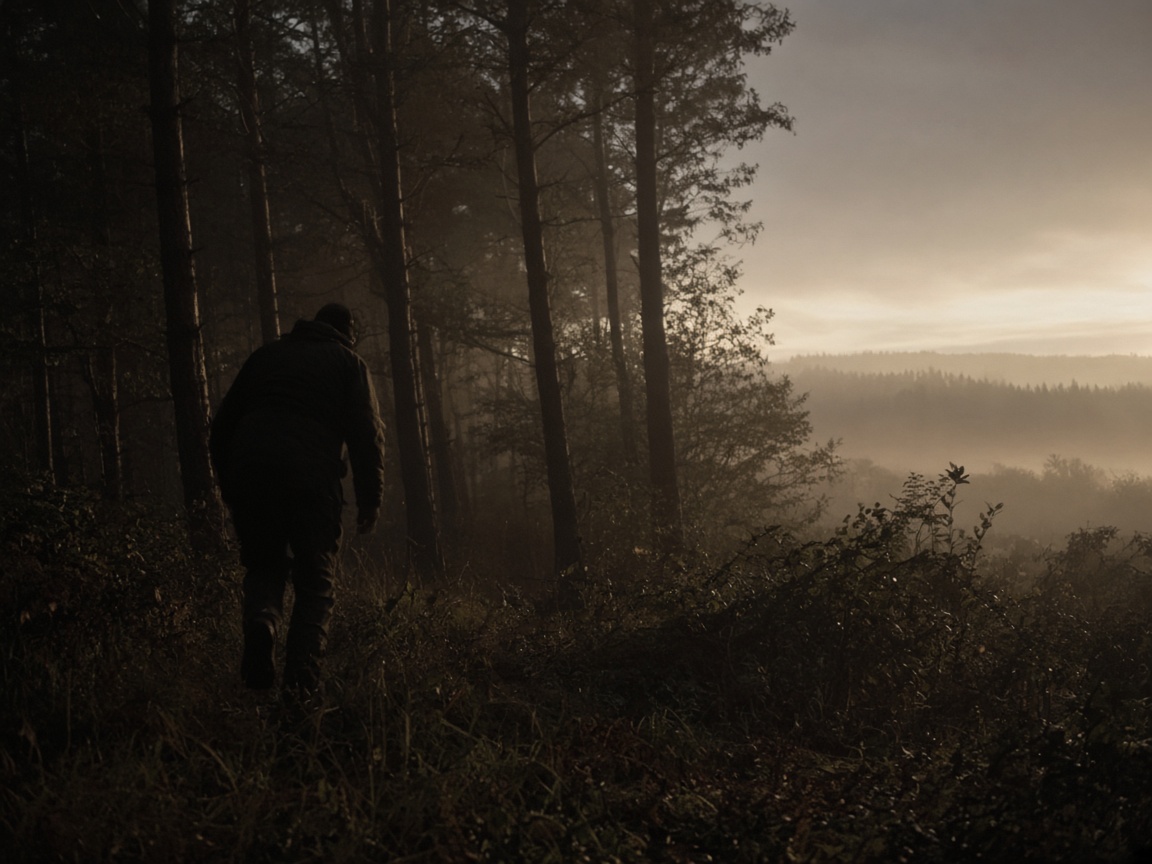
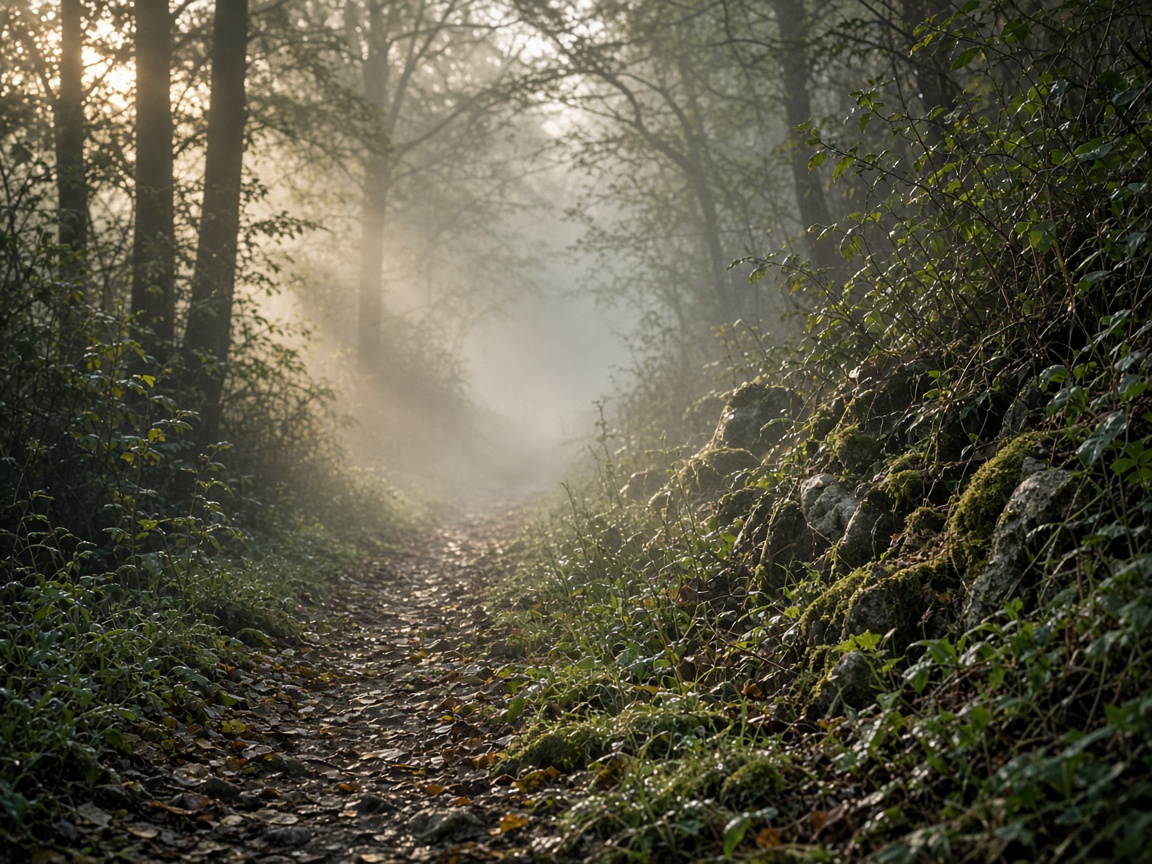
Stalking in pictures
Sources and references on stalking
- Office français de la biodiversité (OFB) — Chasse, permis de chasser et police de l’environnement (consulted on )
- Fédération nationale des chasseurs (FNC) — Chasseur de France : pratiques, sécurité et fédérations départementales (consulted on )
- Légifrance — Code de l’environnement, livre IV, titre II : chasse
- Union nationale pour l’utilisation du chien de rouge (UNUCR) — Recherche au sang du grand gibier blessé (consulted on )
- BASC — Deer stalking (consulted on )
- British Deer Society — Deer, stalking and training (consulted on )
- Wild Deer Best Practice — Best practice guides for deer management (Scotland) (consulted on )
- Real Federación Española de Caza (RFEC) — Modalidades, licencias y federaciones autonómicas (consulted on )
- Boletín Oficial del Estado (BOE) — Legislación estatal y autonómica de caza (consulted on )
- Professional Hunters’ Association of South Africa (PHASA) — Professional hunting in South Africa (consulted on )
- Department of Forestry, Fisheries and the Environment (DFFE) — Biodiversity, hunting and permits in South Africa (consulted on )
- Deutscher Jagdverband (DJV) — Ansitzjagd & Pirsch (consulted on )
- Boletín Oficial del Estado (BOE) — Ley 4/2021, de 1 de julio, de Caza y de Gestión Sostenible de los Recursos Cinegéticos de Castilla y León (texto consolidado) : arts. 32-40, 50-51 y anexo III (modalidades) (consulted on )
- Légifrance — Code de l'environnement, articles L425-6, R425-1-1 et R425-10 : plan de chasse, espèces soumises et dispositifs de marquage (consulted on )
- Narodne novine — Pravilnik o uvjetima i načinu lova (NN 48/2022) : članci 4.–6., 14., 16. (consulted on )
- Nemzeti Jogszabálytár — 79/2004. (V. 4.) FVM rendelet (hatályos 2026.08.30.) : 22. §, 66. §, 68.–71. §, 73. § (consulted on )
- Government Gazette of the Republic of Namibia n° 1580 (hébergé par le Legal Assistance Centre) — GN 119 of 1997 modifiant les Regulations relating to Nature Conservation : règl. 111 (accompagnement du trophy hunter) et 114(1)(b) (consulted on )
- Procuradoria-Geral Distrital de Lisboa — Decreto-Lei n.º 202/2004, de 18 de agosto (versão consolidada, DL 71/2024) : art. 84.º, 86.º, 88.º, 90.º (consulted on )
- legislation.gov.uk — Deer Act 1991 (Angleterre et pays de Galles) : s.2 et Schedule 1 (périodes de fermeture), s.18 (champ territorial) (consulted on )
- NatureScot — Deer management: Policy, Guidance and Best Practice (Code of Practice for Deer Management) (consulted on )
Practice information — not a legal authorisation.