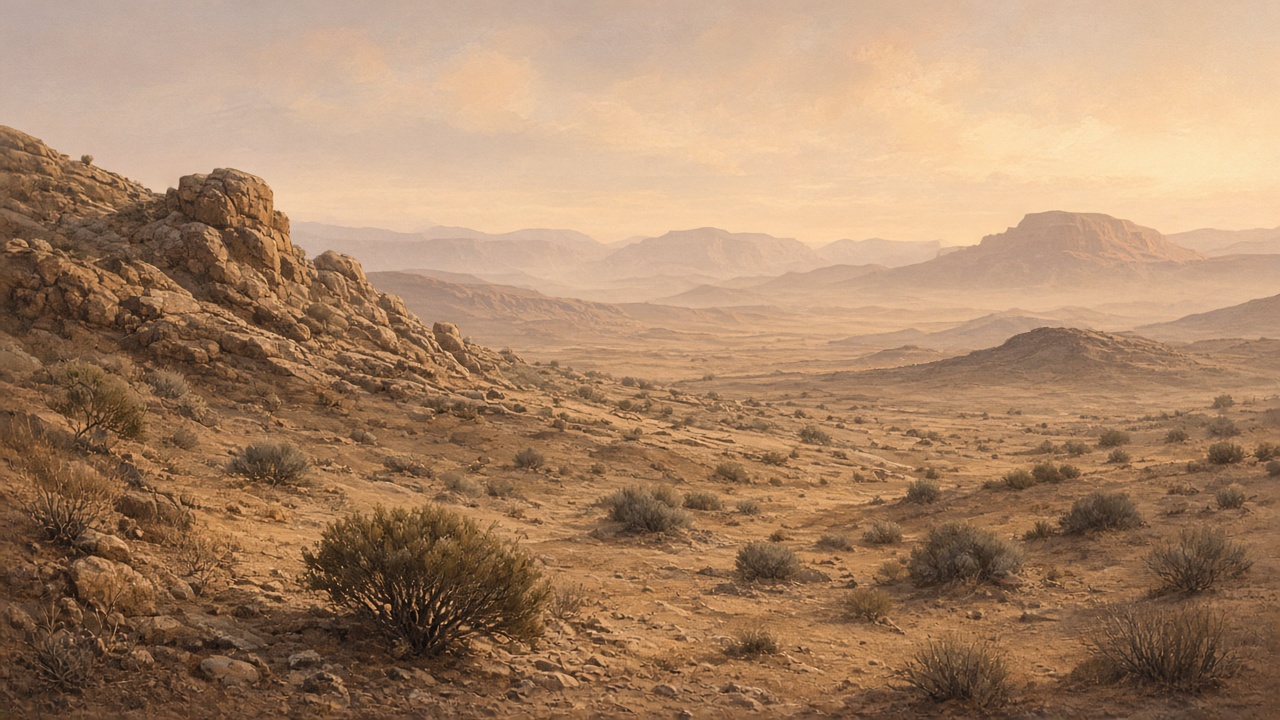
- Hyper-arid deserts receive from 150 mm to almost nothing a year, under 5% of potential evapotranspiration according to the IUCN.
- Their vegetation covers less than 1% of the ground; that of succulent or thorny semi-deserts covers 10 to 30%.
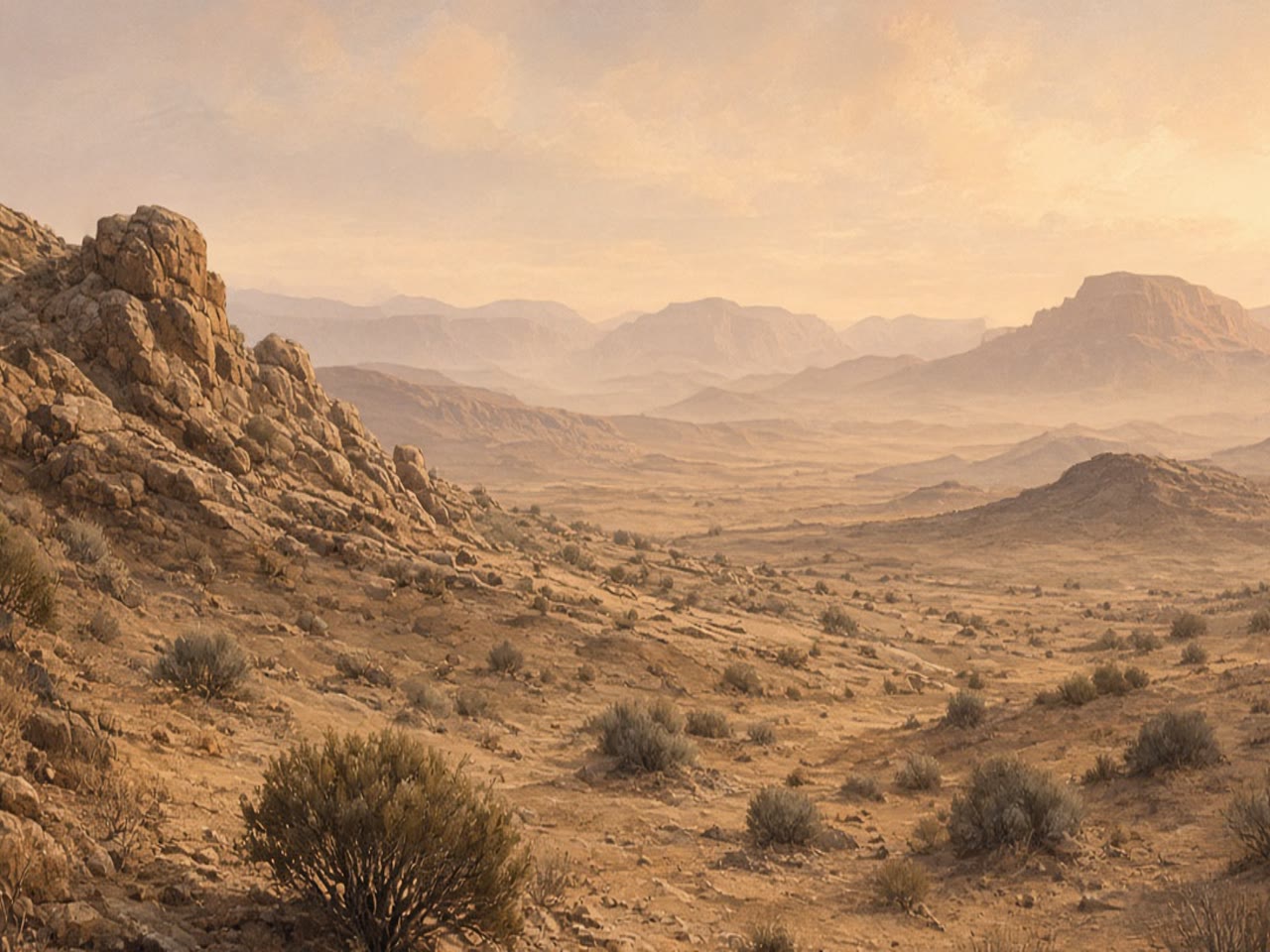
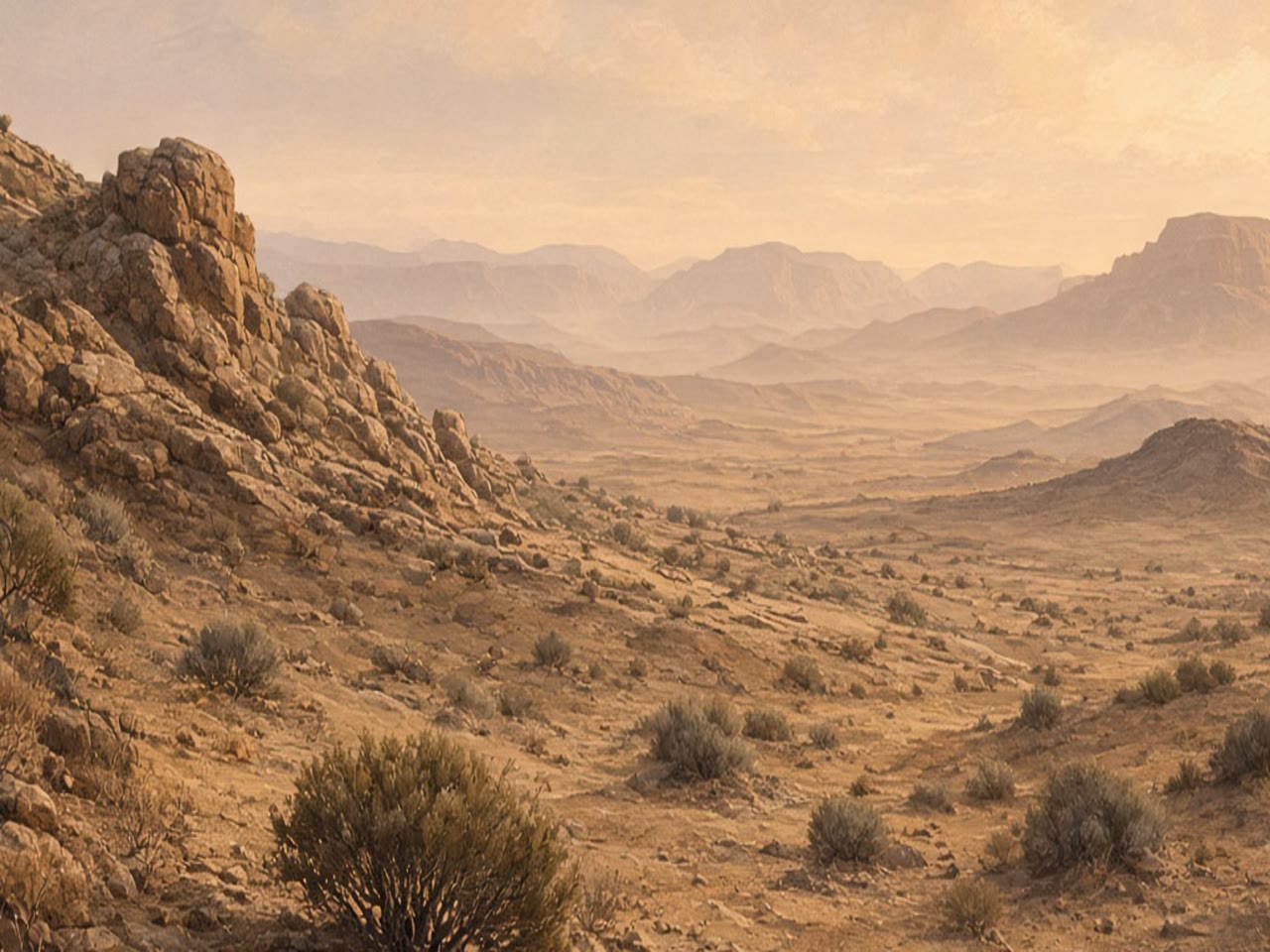
- Stony regs, dune ergs and salt sebkhas form the great Saharan landscapes.
- Wildlife avoids the heat by being active at night or living in burrows.
Definition and boundaries
This sheet covers hot deserts and semi-deserts. The IUCN separates hyper-arid deserts (group T5.5), the most extreme, from succulent or thorny deserts and semi-deserts (T5.2), which are slightly less dry and more vegetated. Cold high-altitude deserts and steppes are not covered here.
Distribution
According to the IUCN, hyper-arid deserts occupy the driest parts of the Sahara and Arabian Peninsula, the Atacama and the Namib. Succulent or thorny semi-deserts are found mainly at subtropical latitudes in the Americas, southern Africa, Madagascar and southern Asia.
Climate
In hyper-arid deserts, rainfall ranges from 150 mm to almost nothing a year, and droughts can last several years. Summers are very hot, but winter nights can freeze. On the Atacama and Namib coasts, fog drifting in from the ocean supplies an essential share of the moisture.
Soils, relief and water
The Sahara shows the main types of desert surface: the reg, a plain of stones and gravel; the erg, a sea of shifting dunes; the hamada, a rocky plateau; and the sebkha, a salt flat where water evaporates. Soils are poorly developed and low in nutrients. Wadis, dry riverbeds, flow only after rare storms.
Structuring vegetation
Hyper-arid deserts carry a few perennial xerophytes, very slow-growing, with long roots and water-storing tissues, often only a few centimetres tall. Semi-deserts are dominated by succulent and spiny plants: cacti in the Americas, euphorbias and aloes in Africa. Ephemeral plants germinate after rain.
Characteristic fauna
Reptiles and invertebrates dominate true deserts, where mammals are scarce and often nomadic: dorcas gazelle, addax and Barbary sheep in the Sahara. Semi-deserts hold more life: Cape hare, South African (Cape) ground squirrel and rock hyrax feed there and are hunted by the caracal; the striped hyena ranges widely across North Africa and western Asia. In North American deserts, collared peccary and mule deer use thickets and dry washes. Many species spend the day in cool burrows.
Functioning and dynamics
Life follows the rains, which are rare and unpredictable: after a shower, seeds germinate, insects hatch and rodents multiply, then populations crash until the next rain. Decomposition is slow and relies on microbes and sunlight. Large herbivores travel vast distances.
Threats
Uncontrolled hunting has wiped out or nearly wiped out several Saharan antelopes, such as the addax and scimitar oryx, now reintroduced in places. Overgrazing around water points, oil and mining operations and tracks open up habitats that were once isolated. Groundwater pumping dries out oases.
Field reading
Tracks read very well in the sand at dawn, before the wind wipes them out. Waterholes, wadis and rocky outcrops concentrate wildlife. Heat, dehydration and navigation are the main risks: carry plenty of water and tell someone your route.
This sheet describes a habitat. It publishes no season, quota or hunting authorisation: those rules must be checked with the competent authorities of the territory concerned.
Documented gaps
- Cold deserts (Gobi, Central Asian plateaus) and arid steppes are not described.
- Reptiles and invertebrates, the dominant groups, are not linked to species sheets.
- No data on the status of reintroduced antelope populations.
Sources
- IUCN Global Ecosystem Typology — T5.5 Hyper-arid deserts (consulted 2026-11-04)
- IUCN Global Ecosystem Typology — T5.2 Succulent or thorny deserts and semi-deserts (consulted 2026-11-04)
Related species
Related techniques
Practice information — not a legal authorisation.
Frequently asked questions
What is the difference between a hyper-arid desert and a semi-desert?
A hyper-arid desert gets almost no rain and its vegetation covers less than 1% of the ground; a semi-desert, slightly wetter, has a clearly denser cover of succulent or spiny plants.
How do desert animals find water?
Many drink little or nothing: they get water from their food, lose very little in urine and avoid the heat of the day.
What are a reg and an erg?
A reg is a desert of stones and gravel; an erg is a vast field of sand dunes.
Does this sheet authorise hunting in this habitat?
This sheet describes a habitat. It publishes no season, quota or hunting authorisation: those rules must be checked with the competent authorities of the territory concerned.
Gallery
Keep exploring
Connect this environment to documented species, techniques and other habitats — without confusing ecological description with hunting authorisation.