- Family
- Fixed ground stand
- Difficulty
- Moderate: little walking, but you need to pick the right spot, keep still for a long time and shoot at an animal that may appear without warning
- Organisation
- Usually alone, sometimes two people sharing a stand
- Key gear
- Binoculars, a low seat or hide net, a zeroed rifle, a shooting rest
- Season
- Varies by species, country and region: check with the local federation or authority
- Who it suits
- Patient hunters, including accompanied beginners, who enjoy watching wildlife
What is the idea behind stand hunting?
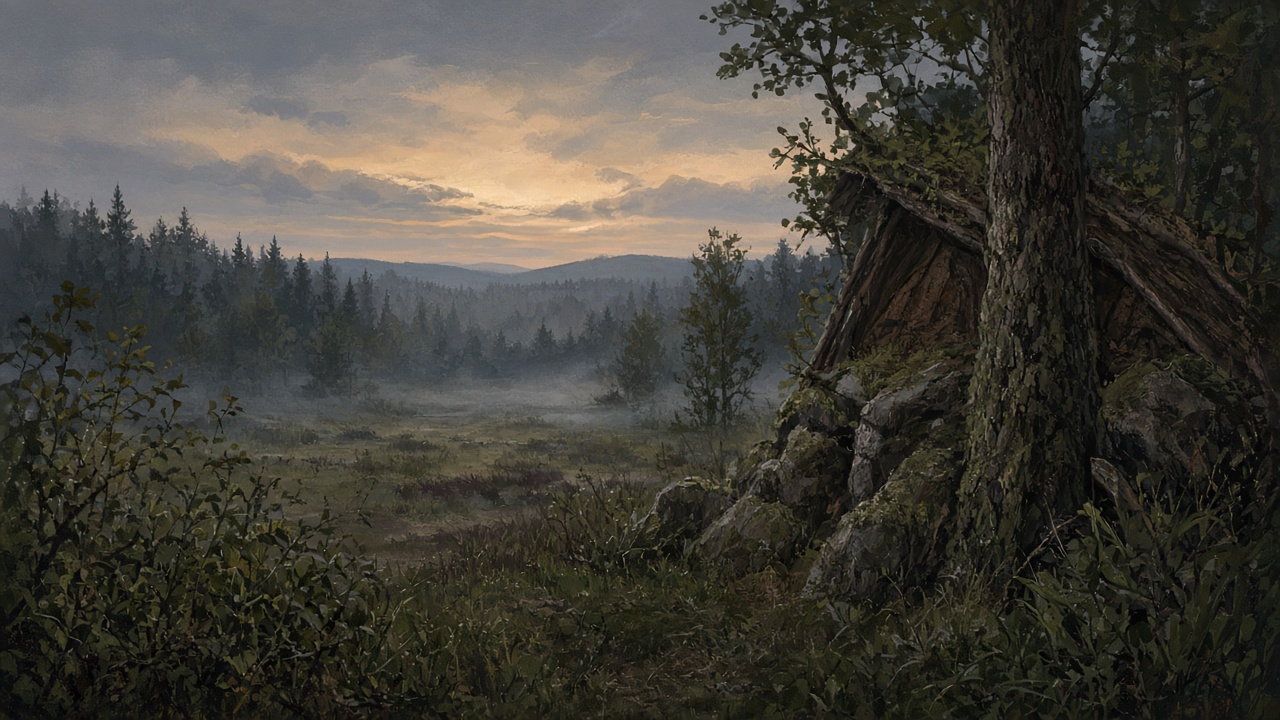
In stand hunting the game comes to you. The work is done beforehand: finding the game paths, the gaps in hedges, the feeding areas where animals come out to eat and the cover where they lie up by day. The stand goes between the two, somewhere with a clear view that does not show your outline against the sky.
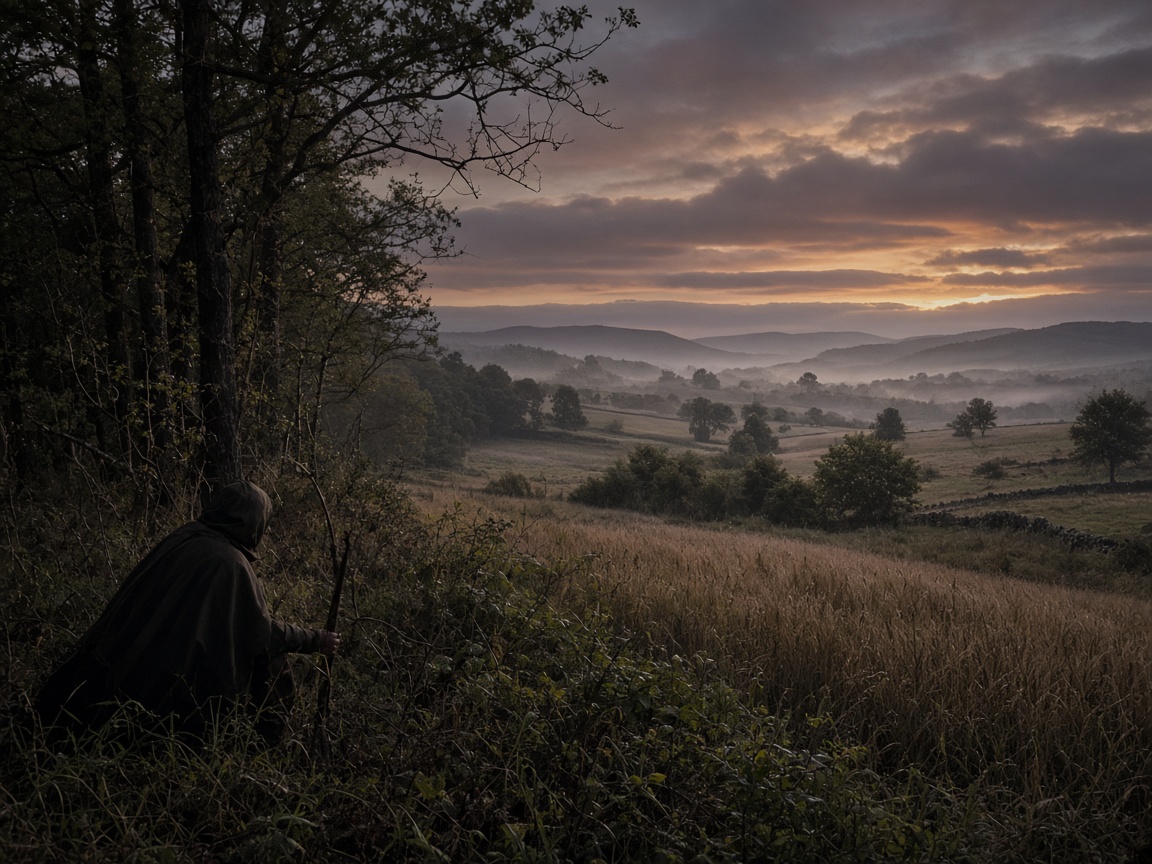
The wind decides where you sit. Pick a spot where the prevailing wind carries your scent away from where game is expected, and have a second one ready in case it shifts. Light matters too: with the sun behind you at dawn or dusk you are not dazzled and you are harder to see.
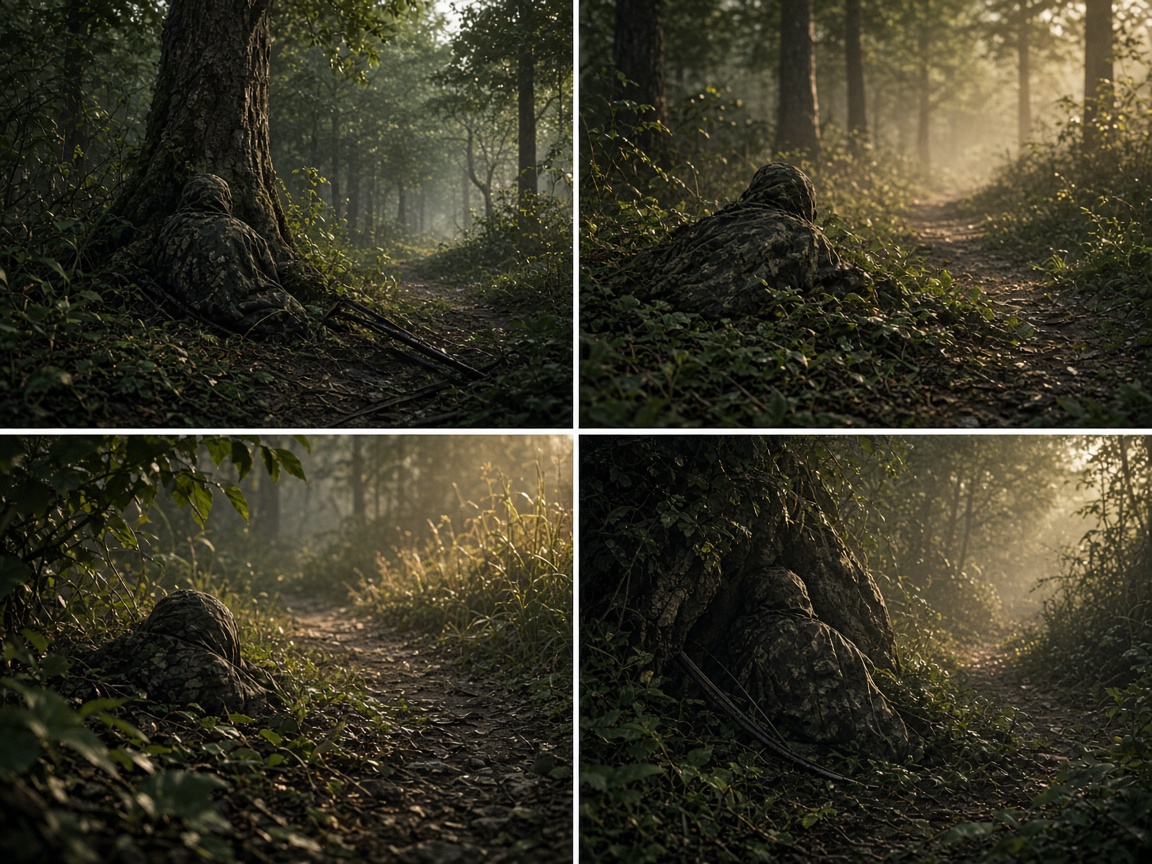
Hunters talk of a morning sit and an evening sit. In the morning animals are heading back to cover; in the evening they are coming out to feed. You can wait on the ground, behind natural cover or a hide net, or from a high seat; baited stands and the palombière, the wood-pigeon hide of south-west France, are particular forms covered in their own guides.
How does stand hunting work in the field?
What equipment do you need for stand hunting?
- A low seat or quiet stool, and a hide net or camouflage screen where natural cover is not enough
- Binoculars that perform well in the poor light of dawn and dusk
- Warm, quiet clothing, because sitting still chills you quickly
- A stable seat or rest that lets you stay still for a long time
Safety rules for stand hunting
- Load only once settled at the stand and unload before leaving it
- Shoot only an animal you have fully identified, never at a sound or a shape in the half-light
- Tell other people using the ground where you will be sitting before you set off
- Work out in daylight, from the stand itself, which shooting directions are safe and which are not
Common mistakes in stand hunting
- Arriving late, when animals are already on the move
- Fidgeting, smoking or checking your phone while you wait
- Always using the same stand whatever the wind is doing that day
- Settling in with the wind carrying your scent towards where game is expected
Which species are hunted by stand hunting?
Where is stand hunting practised?
Croatia
Doček is a recognised individual hunting method. Any hunt within 300 m of the state border must be reported to the police 24 hours in advance.
Czechia
Czech law refers to hunting « na čekané » and bars it within 200 m of a neighbouring hunting ground’s boundary; building hunting facilities or shooting from them inside that strip is also banned.
England
In England, waiting at a ground-level position complements the high seat in deer management. Shooting falls under the Deer Act 1991 (England and Wales): in the close season and at night a Natural England licence is needed, except where the Act’s damage provisions apply. The BASC and British Deer Society code stresses positive identification and a backstop able to stop the bullet.
France
In France, stand hunting (affût) is mainly used for roe deer, wild boar, red deer and fox. Deer are shot under a cull plan that allocates tags to each estate; the departmental hunting federation and the OFB explain local rules, including shooting hours and the status of the fox.
Germany
According to the German Hunting Association (DJV), the Ansitz (waiting in ambush at a stand) is the most widely used hunting method in Germany: the hunter sits still, with the wind in his favour, on a raised seat or at ground level. Federal law bans night shooting of game birds and of hoofed game other than wild boar, with a few listed exceptions.
Hungary
Les is a recognised individual hunting method. Within 300 m of the hunting-area boundary it requires the neighbour’s agreement, except along the state border.
Namibia
In Namibia, the Nature Conservation Ordinance of 1975 expressly counts lying in wait for game as hunting. Hunting requires the relevant permit or authority and, without the Minister's permission, may not take place at night or with artificial light (section 38); permits are issued by the MEFT (Ministry of Environment, Forestry and Tourism).
Portugal
Espera (stand hunting) is a legal method. It extends into the night for wild boar, for big game at full moon, and for ducks within 100 m of water from one hour before sunrise to one hour after sunset.
Romania
The law names la pândă as a hunting method. Using lights to hold game while hunting from ambush counts as poaching, and night-vision or thermal sights and lasers are banned.
Scotland
In Scotland, waiting for deer, on the ground or in a high seat, is used in deer management, especially in woodland. The framework is the Deer (Scotland) Act 1996, administered by NatureScot; the Wild Deer Best Practice guides, published with NatureScot, cover safety, firing positions and what to do after the shot.
South Africa
In South Africa, stand hunting often takes place from a blind near a waterhole or game path, especially by bowhunters, and visiting hunters are accompanied by a professional hunter. Permits are a provincial matter; PHASA and the DFFE provide information on the framework.
Spain — Castilla y León
In Spain, stand hunting is called aguardo or espera. It is widely used for wild boar, often in the evening and at night where regulations allow, as well as for roe and red deer. Rules are set by each autonomous community; the regional federation and the official gazette of each community set out what is permitted.
Rules vary by country and region: check with the local authority. See the sources
Stand hunting compared with neighbouring techniques
Stand hunting waits for the animal where stalking goes out to find it. The high seat is its raised form, giving a wider view and a downward shot. Baited stand hunting adds food near the stand, with a legal status specific to each country. The palombière is a shared stand devoted to migrating wood pigeons and built around live decoys.
Regional forms of stand hunting
- High-seat hunting High-seat hunting means waiting for game from a raised stand, fixed or portable, set on a woodland edge or beside a feeding area.
- Baited stand hunting Baited stand hunting means waiting for game at a stand placed near a spot where grain or bait is put out and which animals visit regularly.
Key terms in stand hunting
- stand hunting
- Waiting motionless at a chosen spot on a game trail or near an area that game uses.
- game path
- A regular route worn by game through vegetation between resting and feeding areas.
- feeding area
- A place where game comes out to feed, such as grassland, crops, stubble, a clearing or mudflats.
- high seat
- A raised stand, fixed or portable, from which the hunter watches and shoots down towards the ground.
- shot signs
- Hair, blood, fragments or the animal’s reaction that tell you where it was hit.
- shot site
- Where the animal stood when it was shot; the starting point of the search.
- blood-tracking dog
- A dog trained to find wounded big game, worked on a long lead by a handler.
Frequently asked questions about stand hunting
What is stand hunting?
It is hunting in which you wait for game without moving, hidden at a spot chosen on its usual route, rather than going out to find it.
How do you choose a spot for stand hunting?
Put it between lying-up cover and a feeding area, on an active game path, with the prevailing wind carrying your scent away, a clear view and a backstop that will stop the bullet.
Should you sit in the morning or in the evening?
Both are used. In the evening you wait for animals coming out to feed; in the morning, for those heading back. Legal shooting hours depend on the country and must be checked locally.
Can you go stand hunting at night?
That depends entirely on the law of the country, and sometimes on the species. Night shooting and night-vision aids are banned or tightly controlled in many places: check with the relevant authority.
How long should you wait on a stand?
There is no set time. Arrive before animals are expected and stay as long as the light and local rules allow, without moving, because an animal can appear at any moment.
What is the difference between a ground stand and a high seat?
On the ground you are closer to the game and more exposed to its sense of smell. In a high seat you see further and shoot downwards, so the ground behind the animal acts as a backstop.
Stand hunting in pictures
Sources and references on stand hunting
- Office français de la biodiversité (OFB) — Chasse, permis de chasser et police de l’environnement (consulted on )
- Fédération nationale des chasseurs (FNC) — Chasseur de France : pratiques, sécurité et fédérations départementales (consulted on )
- Légifrance — Code de l’environnement, livre IV, titre II : chasse
- Union nationale pour l’utilisation du chien de rouge (UNUCR) — Recherche au sang du grand gibier blessé (consulted on )
- British Association for Shooting and Conservation (BASC) — Shooting advice and codes of practice (consulted on )
- BASC — Deer management (consulted on )
- British Deer Society — Deer, stalking and training (consulted on )
- Real Federación Española de Caza (RFEC) — Modalidades, licencias y federaciones autonómicas (consulted on )
- Boletín Oficial del Estado (BOE) — Legislación estatal y autonómica de caza (consulted on )
- Professional Hunters’ Association of South Africa (PHASA) — Professional hunting in South Africa (consulted on )
- Department of Forestry, Fisheries and the Environment (DFFE) — Biodiversity, hunting and permits in South Africa (consulted on )
- e-Sbírka (Ministerstvo vnitra ČR) — Zákon č. 449/2001 Sb., o myslivosti, § 45 odst. 1 (znění platné k 4. 11. 2026) (consulted on )
- Deutscher Jagdverband (DJV) — Ansitzjagd & Pirsch (consulted on )
- Boletín Oficial del Estado (BOE) — Ley 4/2021, de 1 de julio, de Caza y de Gestión Sostenible de los Recursos Cinegéticos de Castilla y León (texto consolidado) : arts. 32-40, 50-51 y anexo III (modalidades) (consulted on )
- Légifrance — Code de l'environnement, articles L425-6, R425-1-1 et R425-10 : plan de chasse, espèces soumises et dispositifs de marquage (consulted on )
- Narodne novine — Pravilnik o uvjetima i načinu lova (NN 48/2022) : članci 4.–6., 14., 16. (consulted on )
- Nemzeti Jogszabálytár — 79/2004. (V. 4.) FVM rendelet (hatályos 2026.08.30.) : 22. §, 66. §, 68.–71. §, 73. § (consulted on )
- Ministry of Environment, Forestry and Tourism (MEFT) — Nature Conservation Ordinance 4 of 1975 : définition de hunt, ss. 25, 32-33 et 38, annexe 6 (huntable game birds) (consulted on )
- Procuradoria-Geral Distrital de Lisboa — Decreto-Lei n.º 202/2004, de 18 de agosto (versão consolidada, DL 71/2024) : art. 84.º, 86.º, 88.º, 90.º (consulted on )
- Portal Legislativ (Ministerul Justiției) — Legea vânătorii și a protecției fondului cinegetic nr. 407/2006, forme actualisée : art. 24, 39, 42 et annexe 1 (consulted on )
- Natural England et Defra (GOV.UK) — Deer licences (consulted on )
- Wild Deer Best Practice (NatureScot) — Guide Index : High Seats, Use of Dogs, Reaction & Follow up, Pony Extraction, Use of Night Vision and Thermal (consulted on )
Practice information — not a legal authorisation.